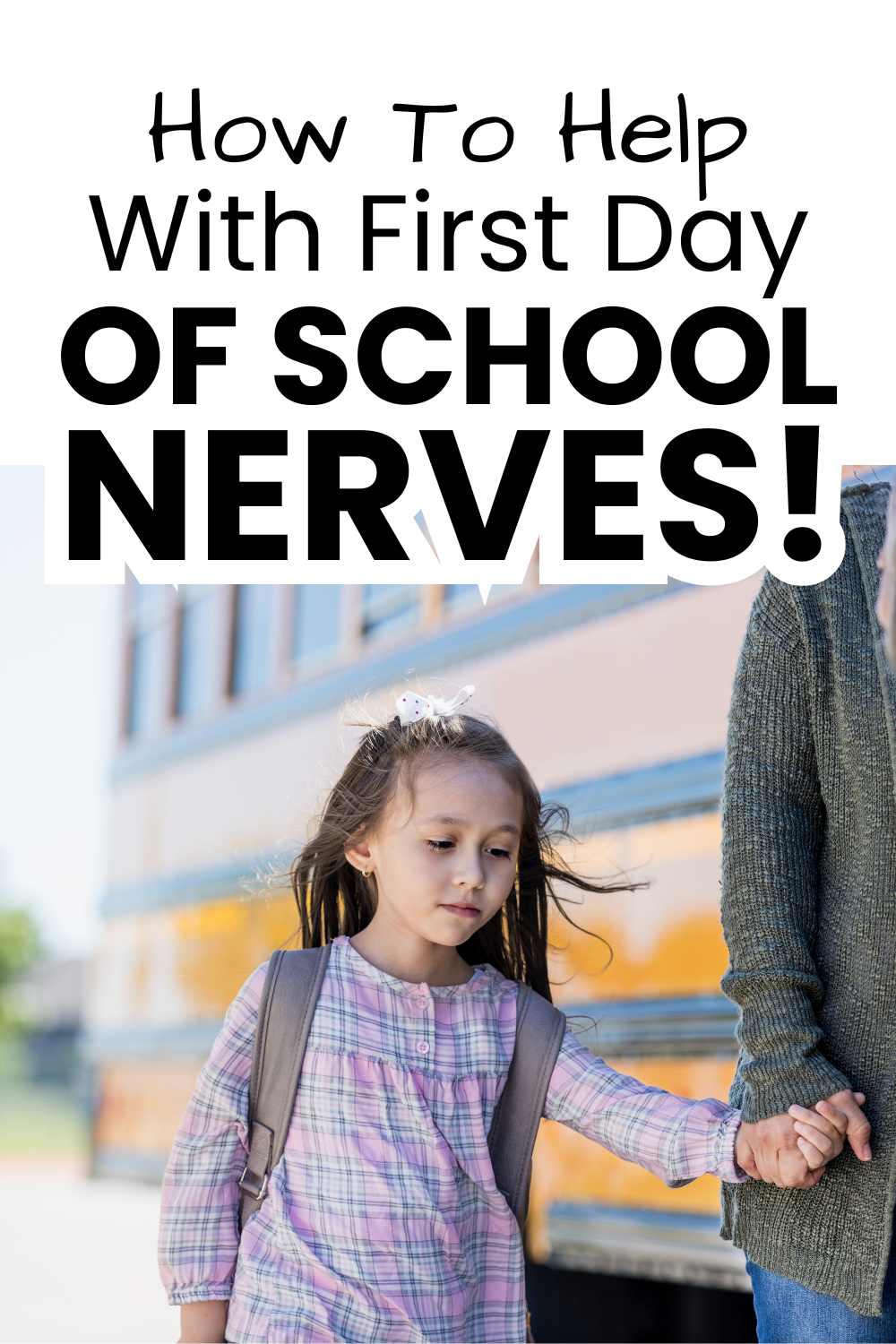
The first day of school can bring big emotions for kids—and parents. If your child is feeling nervous about a new classroom, teacher, or routine, these practical tips will help build confidence, ease anxiety, and make the transition back to school smoother for everyone.
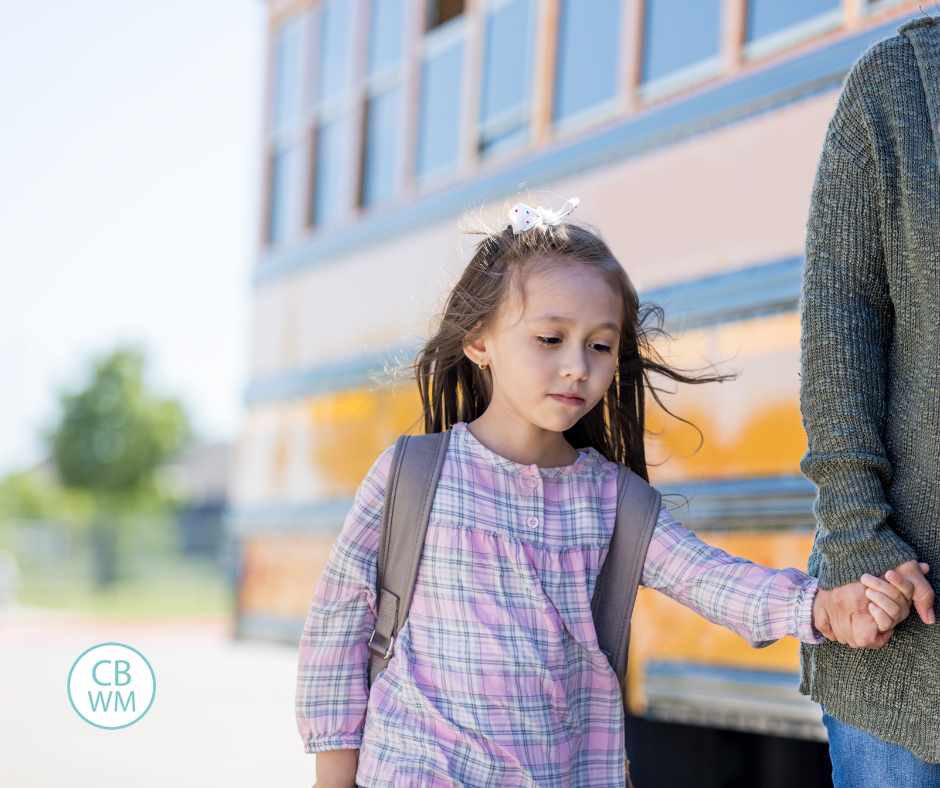
A new school year is exciting — but for a lot of kids (and honestly, a lot of moms too), it also comes with a hefty side of anxiety. Here’s how to help your child feel calm, confident, and ready to walk through that door.
One mom shared with me: “The night before my oldest started kindergarten, he couldn’t sleep. He kept coming out of his room with a new question every fifteen minutes. What if I don’t know where to sit? What if I don’t make any friends? What if I need the bathroom and I don’t know where it is?
I answered every single question as calmly as I could, tucked him back in, and then went and sat on the couch and wondered the same things.”
First day of school nerves are completely normal — for kids AND for parents. They’re actually a sign that your child is paying attention to the world around them and understands that something significant is about to change. That’s not a problem. That’s a healthy, aware kid.
But “normal” doesn’t mean you can’t help. There’s a lot you can do in the days and weeks leading up to that first day — and on the morning itself — to lower the anxiety and set your child up to walk in feeling as confident as possible.
Why Kids Get Nervous About the First Day of School
Before we talk strategy, it helps to understand what’s actually driving the nerves. For most kids, first-day anxiety comes down to a few core fears:
Fear of the unknown. Kids thrive on predictability (sound familiar, Babywise families?). A new classroom, a new teacher, a new routine — that’s a lot of unknowns stacked on top of each other.
Fear of separation. Especially for younger children or kids starting a new school, leaving the safety of home and family feels genuinely hard. This is developmentally appropriate and doesn’t mean something is wrong.
Fear of social situations. Will anyone want to play with me? What if I say something wrong? Social anxiety peaks at transitions, and a new school year is one of the biggest transitions there is.
Fear of failure or not knowing what to do. Older kids especially worry about academic expectations, finding their locker, or not knowing “how things work” at a new school.
Understanding the specific flavor of your child’s anxiety can help you target your reassurance more effectively.
Before the First Day: Do the Prep Work
The most powerful thing you can do for an anxious child is reduce the unknowns before that first morning arrives. Here’s how.
Visit the School Ahead of Time
If at all possible, take your child to the school before the first day. Walk the halls. Meet the teacher. Find the bathroom. Locate the cafeteria. Sit at a desk in the classroom if the school allows it. When kids can picture the physical space in their mind, it’s so much less scary.
Many schools offer orientation days or back-to-school nights specifically for this reason. Take full advantage of them. Even just a drive past the school and a conversation about what happens inside can help.
Practice the Morning Routine
One of the biggest contributors to first-day anxiety is first-day chaos. When the morning is rushed and stressful, it sends kids into school already frazzled before the day has even begun.
In the week before school starts, practice waking up at the new time. Pack the backpack the night before. Lay out the outfit. Eat breakfast at the time you’ll actually be eating it. Running through the routine takes away the logistical stress and lets your child focus on the emotional side of the transition — which is where they really need their energy.
Know how much time you and your child need for the necessary tasks before school so you know what time you need to start getting ready for the day.
This is very much in line with how we approach so many things in the Babywise world: a consistent routine is one of the greatest gifts you can give your child. School mornings are no different.
>>>Read: Back to School Morning Routine Ideas for Kids (by Age Group)
Talk About It — The Right Way
Your child needs to know that nervous feelings are okay and expected. Normalize it without amplifying it.
Try: “It’s really normal to feel a little nervous before something new. I felt nervous on my first day of school, too. Those feelings don’t last — they usually go away pretty quickly once you’re there and things start happening.”
What you want to avoid is getting into extended, repeated conversations that circle around the anxiety without resolving it. There’s a difference between validating feelings and rehearsing them. A quick, warm acknowledgment followed by a pivot to something practical (“so here’s what we’re going to do…”) is usually the most helpful approach.
Read Books About Starting School
For younger kids especially, picture books are a wonderful tool for processing big feelings in a safe way. Look for books where characters feel nervous, work through it, and end up okay. This gives kids a mental “script” for their own experience.
Some favorites in our house have included The Kissing Hand by Audrey Penn and First Day Jitters by Julie Danneberg — both of which are sweet and relatable without being saccharine.
>>>Read: Great Picture Books for Back to School
Let Your Child Have Some Control
Anxiety often feeds on feeling powerless. Giving your child small, meaningful choices around the first day helps restore their sense of control. Let them pick their first-day outfit. Let them choose what goes in their lunchbox. Let them decide which backpack they want.
These feel like small things, but they matter. They send the message: You have a say in how this goes.
>>>Read: How to Transition from Summer to School Schedules Smoothly
On the Morning of the First Day
You’ve done the prep. Now it’s game day. Here’s how to make the morning itself as smooth as possible.
Start Calm, Stay Calm
Your child is watching you for cues. If you’re visibly anxious, rushing around, or emotional at drop-off, they will take that as a signal that they should be anxious too. I know this is easier said than done — dropping off your kindergartner for the very first time is emotional, full stop — but try to keep it together until you’re back in the car.
Speak in an even, warm, confident voice. Move at a reasonable pace. If they see you calm, it gives them permission to be calm too.
Keep the Goodbye Short and Sweet
This is one of the most important things: don’t linger at drop-off. A long, drawn-out goodbye ramps up anxiety for everyone. Give your child a hug, say something confident and brief (“You’re going to have a great day. I’ll see you at 3!”), and then go.
I know it’s tempting to stay until they seem “okay.” But often, staying makes it harder — not easier. Kids tend to settle much faster once the parent has left and the distraction of the classroom takes over. Trust the teachers. They’ve seen this hundreds of times and know how to help.
If your child is really struggling, it can help to have a short, predictable goodbye ritual. A special handshake, a particular phrase, a kiss on the hand — something they can carry with them that’s from you.
Feed Them Well
A child who hasn’t eaten a real breakfast is going to have a harder time regulating their emotions. Make sure they have a solid, protein-anchored breakfast before they head out the door. This sounds basic, but it makes a real difference.
Acknowledge the Feelings, Then Focus Forward
If your child is tearful or clingy on the morning itself, acknowledge it without letting it derail the plan.
Try: “I can see you’re feeling nervous. That makes sense. And you’re brave enough to do it anyway. Let’s go.”
You’re not dismissing the feeling. You’re also not letting it become the reason to stay home. Courage isn’t the absence of fear — it’s doing the thing anyway. That’s a powerful lesson to model.

You know when it is time to get ready for back to school, but your brain is on vacation because it is still summer vacation and you can’t figure out where to start? This 13-page planner quickly and simply takes you through all you need to do to prepare for back to school. Read more about this in this post.
$4.99 – This is an instant download eBook. To purchase, click the Add To Cart button below. You will then have an instant download. It is that simple. By making a purchase, you are agreeing to my privacy policy.
After the First Day: The Debrief
When your child comes home, resist the urge to pepper them with questions immediately. Kids often need a snack and some decompression time before they’re ready to talk.
Once they’ve had a few minutes to breathe, try some open-ended questions rather than “How was it?” (which usually gets you “Fine”):
- “What was the most interesting thing that happened today?”
- “Did anything surprise you?”
- “Who did you sit next to at lunch?”
- “Was there anything hard? Anything easy?”
If the first day was rough, validate it without catastrophizing. “That sounds really hard. I’m proud of you for getting through it. It gets easier — every day you’ll know a little more about how things work.”
And if the first day was great, celebrate it! Sometimes the anxiety is way bigger than the actual event, and that’s a wonderful discovery for a child to make.
>>>Read: 45 Questions to Get Your Child Talking
When to Be Concerned
Most first-day (and first-week) jitters fade naturally as kids settle into the new routine. But there are times when the anxiety is more persistent and may need more support.
Talk to your child’s teacher or pediatrician if:
- Your child’s anxiety is not improving after the first few weeks of school
- They’re having physical symptoms regularly (stomachaches, headaches, vomiting on school mornings)
- They’re refusing to go to school entirely
- The anxiety is significantly impacting their sleep or appetite on an ongoing basis
Persistent school anxiety is real, and there’s no shame in getting support. Early intervention makes a big difference.
A Final Word for the Anxious Mamas
If your child is nervous about the first day, there’s a good chance you are too. It’s okay to feel that. Watching your child navigate something hard — even something as ordinary as a new school year — is one of the more tender parts of parenting.
But here’s what I’ve learned after doing this with multiple kids: they are more capable than we give them credit for. The confidence they build from getting through something scary is worth more than protecting them from the scary feeling in the first place.
So take a breath. Do the prep. Keep the goodbye short. And then trust them — and trust yourself. You’ve been setting them up for this their whole lives.
Related Posts
- First Day of Kindergarten: What Parents Need to Know
- Sample Sleep Schedules for School-Aged Kids
- Creating an After-School Routine that Works for the Whole Family
- How to Teach Kids Time Management for the School Year
- How to Get Out of the House Faster with Kids
- Traditions for the First Day of School Your Children Will Love
- How to Help an Anxious Child About Starting a New School Year