
Summer travel doesn’t have to wreck your baby’s sleep! Learn practical tips for hotel rooms, time zone changes, overstimulation, and getting back on track after vacation—without becoming a slave to the schedule.
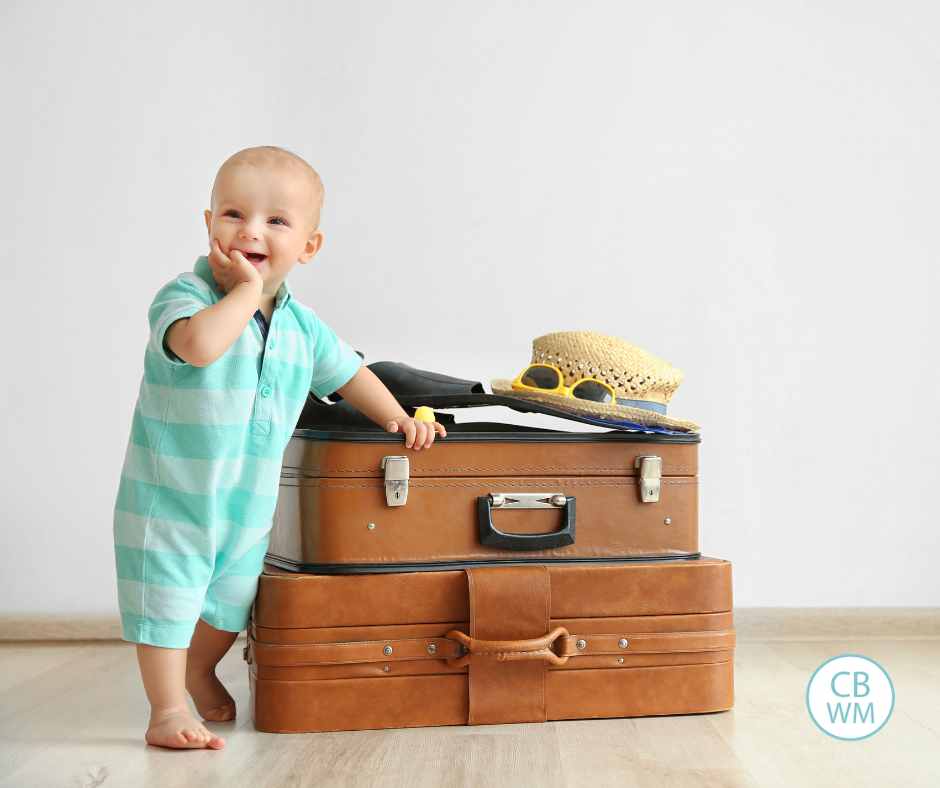
Summer is here, and with it comes road trips, flights, beach vacations, and visits to grandma’s house. As a Babywise parent, you have worked hard to get your baby or toddler sleeping well. The last thing you want is for a week of vacation to unravel all of that progress.
The good news? It doesn’t have to. With a little planning and the right mindset, you can protect your child’s sleep during summer travel — and still actually enjoy your vacation.
Let’s walk through the three biggest sleep challenges that come with summer travel and how to handle each one.
Post Contents
- Sleeping in Hotel Rooms and Unfamiliar Places
- Navigating Time Zone Changes
- General Tips for Sleeping Away From Home
- When Sleep Falls Apart Anyway
- Getting Back on Track After Travel
- Related Posts
Sleeping in Hotel Rooms and Unfamiliar Places
A hotel room presents a unique set of challenges. The space is small. Your baby can see you from their crib. There is unfamiliar noise and light. And everything smells different.
Here is how to set your child up for success in a hotel room.
Recreate Your Sleep Environment
The single most important thing you can do is make the sleep space feel as much like home as possible. Your goal is to remove as many unfamiliar variables as you can.
- Bring your sound machine. This is non-negotiable for travel. A white noise machine drowns out hallway noise, other guests, and the general sounds of an unfamiliar building. If you don’t have a portable one, now is the time to get one.
- Bring blackout curtains. Hotel blackout curtains are often not as effective as they look. Travel blackout curtains that suction or clip to a window can make a huge difference, especially in summer when the sun sets so late.
>>>Read: Blackout Curtains to Help Baby Sleep Better
- Bring your child’s sleep sack, swaddle, or lovey. These items carry the scent of home and signal to your child that sleep is coming. Don’t leave them behind.
- Bring a travel crib you know your child sleeps in. If your child has never slept in a Pack ‘n Play, a hotel trip is not the time to find that out. Practice at home a time or two before you leave.
>>>Read: 12 Travel Beds for Babies and Toddlers to Sleep In
Deal With the “Baby Can See Me” Problem
One of the trickiest parts of hotel sleep is that your baby can often see you or sense you in the room. If your child is used to sleeping in their own room, suddenly having you just a few feet away can be very stimulating.
If your room has a bathroom with enough space, setting up the Pack ‘n Play in there (with the vent fan running as white noise) can be a great solution. Some parents hang a sheet or use a SlumberPod (affiliate link) to create a dark, private sleeping space within the hotel room. Others find that simply getting into bed themselves and pretending to sleep helps their child settle.
Think through your room layout before you arrive and have a plan.
>>>Read: Tips for Baby Sleeping in Hotel Room
Do Your Sleep Routine
Whatever bedtime routine you do at home — bath, lotion, pajamas, feeding, song, prayer — do it in the hotel. The routine itself signals to your child’s brain that sleep is coming. It does not matter that you are in a different place. The familiar sequence of events is calming.
Don’t skip the routine just because you are traveling. It is one of the most powerful tools you have.
Time zone changes are one of the most common travel sleep concerns I hear from parents. The great news is that this is something you can manage intentionally.
Small Time Zone Differences (1–2 Hours)
For a one- or two-hour time zone shift, the simplest approach is often to just stay on your home time zone for the duration of the trip. A two-hour difference means a 7 PM bedtime at home becomes a 9 PM bedtime on destination time — which might actually work in your favor on vacation when evenings are busy anyway.
When you return home, one or two days of consistency will get you back on track.
Larger Time Zone Differences (3+ Hours)
For bigger shifts — like traveling from the East Coast to Hawaii, or crossing several time zones internationally — you will want to be more intentional.
Start shifting before you leave. A few days before your trip, begin adjusting your child’s schedule by 15–30 minutes each day in the direction of your destination’s time zone. This eases the transition so your child isn’t hit with a sudden three-hour shift on day one.
Use light exposure strategically. Light is one of the most powerful cues for the body’s internal clock. Get your child outside in bright morning light at the time that matches the new time zone. In the evenings, keep things dim as bedtime approaches.
Shift meal times, too. Hunger is also a biological clock cue. Shifting feeding times alongside sleep times helps your child’s whole system adjust faster.
Be patient with naps. Naps tend to be the last thing to regulate when adjusting to a new time zone. Night sleep usually comes first. Give it two to three days.
>>>Read: Tips for Shifting Your Schedule (Time Change, Time Zones)
Going West vs. Going East
Most people find westward travel easier because it means a later bedtime — and most babies have an easier time staying up a little later than falling asleep earlier. Going east is harder. If you are headed east, try to start shifting your child’s schedule a few days early.
General Tips for Sleeping Away From Home
Whether you are at grandma’s house, a vacation rental, or a campsite, these general principles apply.
Protect the First Nap
If at all possible, keep your baby’s first nap of the day at the place you are staying rather than in the car or stroller. The first nap sets the tone for the whole day. A solid first nap makes it much more likely that the rest of the day goes smoothly.
>>>Read: The Vital Importance of the First Nap
Watch for Overstimulation
Summer travel is exciting — for you and for your child. New places, new people, new experiences all add up to a lot of stimulation. More stimulation means your child may hit their limit sooner than they would at home.
Watch your child’s tired cues carefully while traveling. You may find that wake windows need to be a bit shorter than usual because the stimulation load is higher. An overtired baby on vacation is nobody’s idea of fun.
>>>Read: How To Calm Your Overstimulated Baby
Vary Sleep Locations at Home Before You Leave
One of the best things you can do before a trip is to practice sleeping in different places at home. Put your baby down for a nap in the Pack ‘n Play in your living room. Let them sleep in a different bedroom. Get them used to the idea that sleep can happen in places other than their usual crib. It makes the transition to an unfamiliar environment much smoother.
>>>Read: Sleeping Tip: Vary Sleeping Locations
Bring Comfort Items and Familiar Smells
If your child has a lovey, stuffed animal, or special blanket, bring it. If your child is not yet attached to a comfort item but you travel frequently, now might be the time to introduce one. A comfort item gives your child something familiar to hold onto in an unfamiliar place. Just make sure you do not leave behind an important comfort item! We have done that before.
Some parents will sleep with a small cloth or their child’s lovey for a night before a trip so it carries their scent — a comforting and familiar smell when your child wakes in the night in a strange room.
Keep Bedtime Routine Consistent
Just as with hotel rooms, your bedtime routine is your greatest asset when sleeping away from home. Do the same steps, in the same order, every single night. It communicates to your child: this is what we do before sleep. It does not matter where we are.
When Sleep Falls Apart Anyway
Even with perfect preparation, sleep sometimes falls apart on vacation. A nap gets skipped. Your baby wakes at 3 AM for two hours. Your toddler refuses to sleep in the Pack ‘n Play.
Here are a few reminders for when things go sideways.
It is okay to offer more help than usual. If your baby is struggling to fall asleep in an unfamiliar place, it is perfectly fine to rock, nurse, or hold to sleep during that trip. This does not undo your sleep training at home. Context matters to babies. When you return home, return to your normal approach and your child will typically fall back into their routine quickly. BUT know some babies will take a couple of weeks of super consistency to get back on track.
Early bedtime is your friend. Anytime your child has a rough day of sleep while traveling — short naps, missed naps, lots of stimulation — move bedtime earlier. An early bedtime helps prevent that overtired spiral and often means better overnight sleep.
Don’t stress about every nap. Some sleep is better than no sleep. A catnap in the stroller or a slightly short nap in the Pack ‘n Play is fine. Give yourself permission for good enough to be good enough on vacation.
You do not have to be a slave to the schedule. Babywise has always been about letting the schedule serve your family — not the other way around. A missed nap here and there will not ruin your baby. Some flexibility is healthy.
>>>Read: Let Your Schedule Serve You: You Don’t Serve Your Schedule
Getting Back on Track After Travel
The day you get home is not the day to try to have a perfect schedule. Give yourself and your child a grace day. Let everyone decompress.
Starting the day after you return, go straight back to your normal routine. Be consistent and predictable. For most Babywise babies, it takes only two to four days to fully return to normal sleep patterns after a trip, though it can take a couple of weeks. The more consistent you are once you are home, the faster it happens. Also, the more consistent you were before you left, the more likely your child will bounce back quickly.
If your child seems extra clingy or unsettled after returning home, that is normal. Travel can be wonderful and fun, but it can also be a lot for little ones. Extra snuggles and a very consistent routine go a long way.
>>>Read: How To Handle Baby Sleep When Traveling
Conclusion
Summer travel with babies and toddlers does not have to mean giving up on sleep. With some preparation — a portable sound machine, travel blackout curtains, a familiar bedtime routine, and a plan for time zone adjustments — you can protect your child’s sleep and enjoy your vacation.
And on the days when it all falls apart anyway? Give yourself grace. A few rough nights will not undo the solid foundation you have built. Get back home, get back on schedule, and you will be amazed at how quickly your little one bounces back.
Happy travels!
Related Posts
- How To Handle Baby Sleep When Traveling
- 12 Travel Beds for Babies and Toddlers to Sleep In
- Tips for Feeding Baby and Napping Away From Home
- Blackout Curtains to Help Baby Sleep Better
- How To Calm Your Overstimulated Baby
- Sleeping Tip: Vary Sleeping Locations
- How To Go Out With Your Baby Without Disruption
- Let Your Schedule Serve You: You Don’t Serve Your Schedule
- How To Help Baby Sleep at a Holiday Party