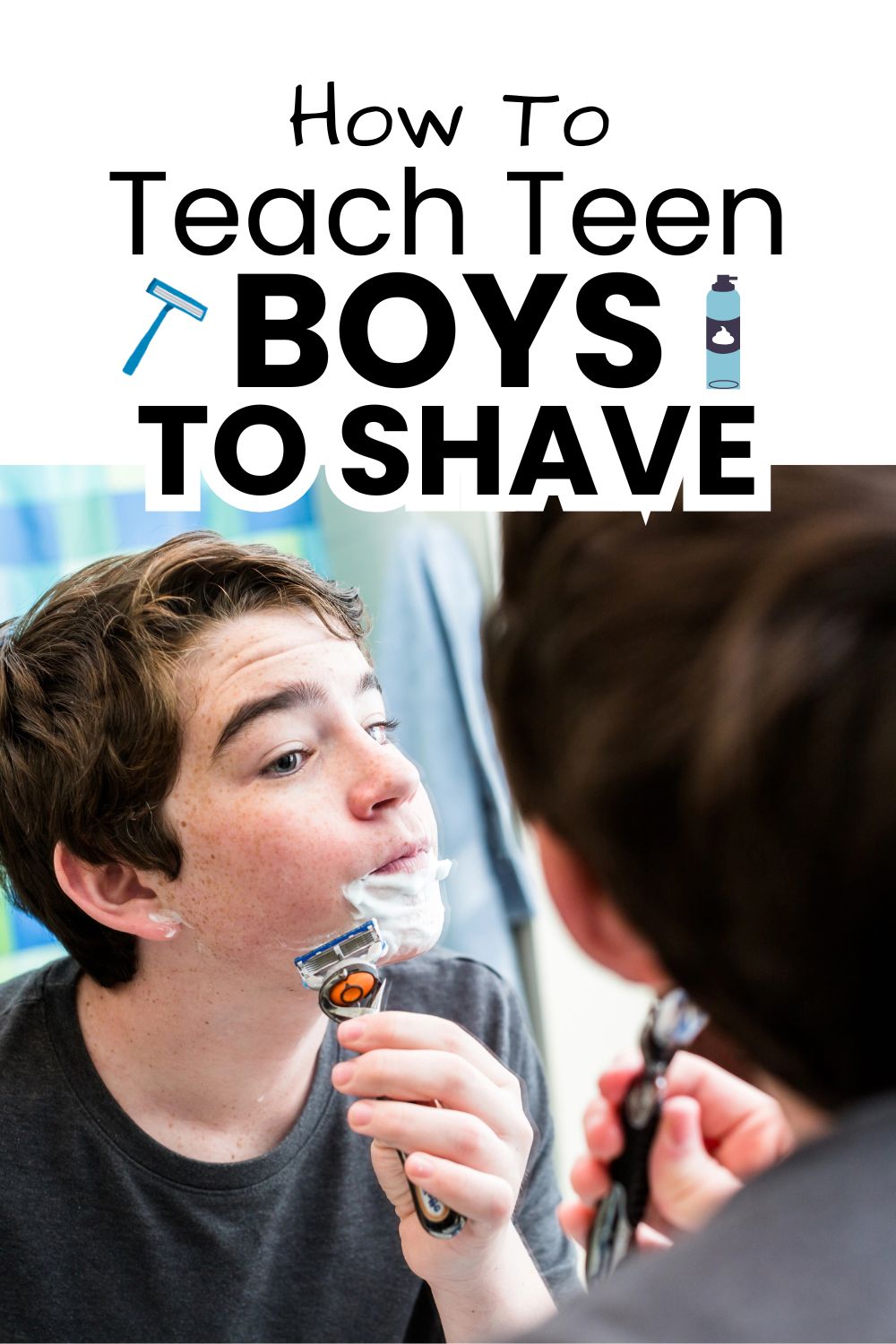
Wondering when boys start growing facial hair and how to teach your son to shave? Get the age expectations, supplies, and step-by-step tips you need.
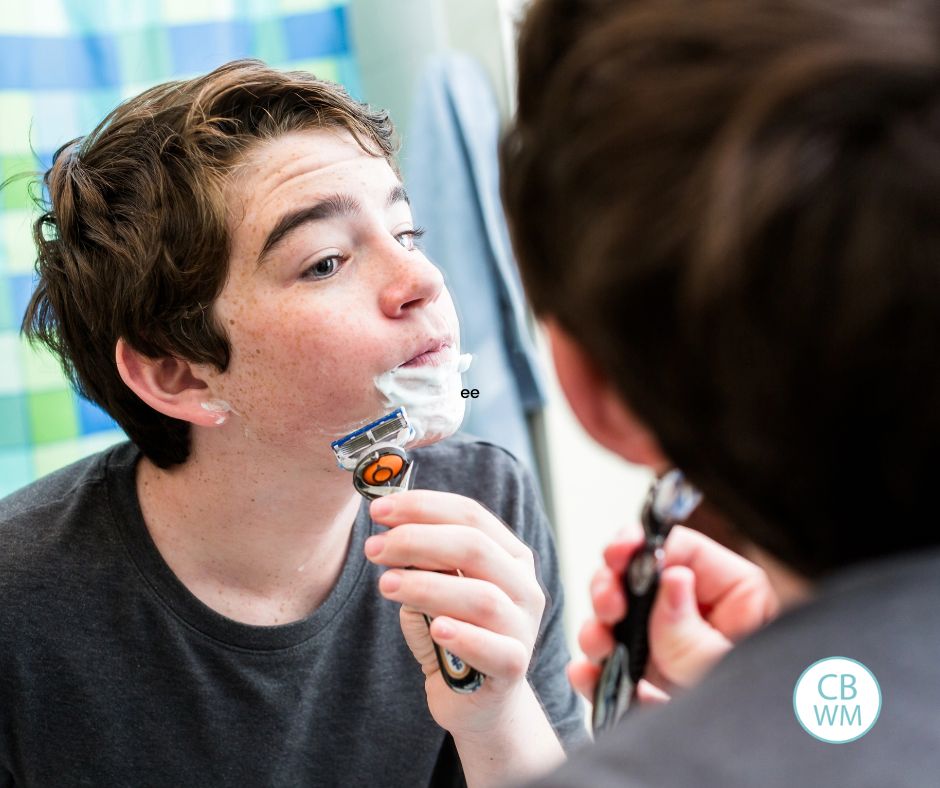
Looking for tips on how to teach your son to shave? Find out when boys typically start growing facial hair, what supplies you need, and how to walk your teen or tween through his first shave with confidence instead of nerves.
One day your sweet boy has that same soft peach fuzz he’s always had, and the next, you’re squinting at his upper lip wondering if that’s a smudge or the start of a mustache. It happens fast, and it catches a lot of parents off guard.
This is one of those milestones that can feel a little awkward to navigate, especially if you’re a mom raising a son. But teaching your boy to shave doesn’t ahve ot b e a big, stressful conversation. With the right timing and a little preparation, it can actually be a great bonding moment and a meaningful step toward adulthood for him.
This post will cover everything you need to know: when to expect facial hair, how to know he is ready, what supplies to grab, and exactly how to walk him through it.
When Do Boys Start Growing Facial Hair?
This is the question most parents and teens have first, and the honest answer is it varies. Genetics play a huge role here, so if your son’s dad or grandfather were early or late bloomers, your son may follow a similar pattern.
That said, there is a timeline of what to expect.
Facial hair growth is one of the later signs of puberty, generally showing up a year or two afer pubic hair starts to develop. Most boys will notice the first faint hair at the corners of the upper lip somewhere between ages 11 and 14. From there, it spreads to form more of a full mustache over the upper lip, usually between 14 and 16. The cheeks and area under the lower lip tend to fill in next, and a fuller beard doesn’t usually come in until the later teen years, often 16-19 or even into the early twenties for some guys.
A few things to keep in mind:
- Some boys notice their first facial hair as young as 10, while others don’t see much until 15 or 16. Both are completely normal.
- The hair usually starts soft, light, and fuzzy before it gets darker and coarser. This is part of why it can be tricky to tell when it is actually time to start shaving versus when it’s still just fuzz.
- Facial hair typically shows up around the same general time as underarm hair and a deepening voice, so if you are noticing those other changes, shaving might not be far behind.
- A full, even beard is genuinely one of the last puberty milestones to complete. Don’t be surprised if your 16 or 17-year-old still has some patchy spots. That’s normal, too.
>>>Read: Voice Change in Preteen Boys: What to Expect and How to Help Him Through It
Because the timeline is so individual, the best approach is to watch your son rather than a calendar. When you notice the fuzz turning darker and more noticeable, especially on the upper lip, that is usually your cue that a shaving conversation is coming soon.
Signs Your Son is Ready to Start Shaving
Just like with our daughters and shaving, there is no single “right” age for boys to start shaving. Some boys will be eager to shave the moment they see even a hint of hair, mostly because they are excited about this marker of growing up. Others will be embarrassed or unsure and might avoid the topic altogether, even if their friends are teasing them about a mustache shadow.
A few signs it si probably time for your teenage son to shave:
- You can visibly see hair on his upper lip or chin, even if it is still light
- He mentions it, feels self-conscious about it, or asks you or his dad about shaving
- Friends or classmates have started noticing or commenting
- He shows interest in mimicking dad or an older brother
If your son seems hesitant, you don’t need to force the issue. But it is worth bringing it up gently, especially if he seems embarrassed and just doesn’t know how to ask. A simple, low-key, “Hey, I noticed you are starting to get some hair up there; want me to show you how to shave when you are ready?” takes the pressure off an dlets him decide the timing.
What Supplies Does He Need?
You don’t need a fancy setup to get started. The basics are:
- A razor
- Shaving cream, gel, or a bar of soap that lathers well
- Aftershave balm or gentle lotion
For a first-time shaver, a simple disposable or cartridge razor is usually the easiest and safest choice. There’s less to manage than an electric razor, and if it gets dull or damaged, you just toss it and grab a new one, which takes some of the pressure off of getting things just right.
Some boys prefer an electric razor for their first year or two, especially if their facial hair is still light and patchy. Electric razors are a little more forgiving on sensitive, acne-prone skin since there’s no blade directly on the skin, which can be a real perk for a teen who is also dealing with breakouts.
For shaving cream, gel works well and gives good coverage, though plenty of guys (myself included, from watching my own family) find that any lathering soap does the job just fine once they get the hang of it if they don’t have sensitive skin. If he has sensitive skin or acne, look for a product labeled for sensitive skin to help cut down on irritation.
How to Teach Your Son to Shave
Even if he seems eager to just go for it, it’s worth walking him through the basics first so he’s not learning through trial and error (and nicks). You can demonstrate the motions fully dressed, using a capped razor or just talking him through it, before he tries it for real in the shower or at the sink.
Here is what to cover:
- Wet the skin first. Warm water for a few minutes, or right after the shower, softens the hair and makes it much easier to cut cleanly.
- Apply shaving cream, gel, or soap. This creates a barrier between the blade and skin, which is the number one thing that prevents razor burn and irritation.
- Shave with the grain first. That means shaving in the same direction the hair grows, not against it. This is gentler on the skin and a good place for a beginner to start.
- Use short, light strokes. No need to press hard. Let the razor do the work.
- Go slow around tricky spots. The area under the nose, along the jawline, and near the neck have more curves and are where nicks most often happen.
- Rinse the blade often. A clogged blade tugs at the skin instead of cutting cleanly.
- Rinse the face with cool water when done, then pat dry and apply a gentle aftershave balm or lotion if his skin tends to feel tight or irritated afterward.
Once he is comfortable with the basics and shaving with the grain, some guys eventually shave against the grain for a closer shave, but that is a more advanced move that can also increase irritation and ingrown hairs, so there is no rush to get there.
Good Rules to Set for Shaving
A few simple ground rules go a long way in keeping this a safe, positive routine:
- Don’t share razors with siblings or friends. It isn’t sanitary, and it also makes it easier for him to keep track of when his own blade needs replacing.
- Replace the blade when it starts to feel dull or tug at the skin. A dull blade actually causes more nicks and irritation than a sharp one.
- Keep the razor stored somewhere younger siblings can’t easily grab it.
- Encourage him to shave when he has a few unrushed minutes rather than squeezing it in when racing out the door. Rushing is when most nicks happen.
If mornings are already a scramble in your house, this might be a good moment to look at your family’s overall morning routine and build in a few extra minutes for him now that shaving is part of the mix.
Making It a Positive Milestone
This is genuinely a big deal for a lot of boys, even if they act nonchalant about it. Shaving is one of those visible, tangible signs that they are growing up. How you handle it can shape whether it feels exciting or stressful.
A few ways to make it a good experience:
- Let him lead. Some boys want you right there walking them through every step, and others would rather just get quick pointers and go do it privately. Follow his comfort level.
- If there is a dad, stepdad, older brother, or other trusted male figure in his life, it can mean a lot for him to be the one to show him the ropes. That said, plenty of moms handle this milestone solo and completely nail it too. Don’t feel like you are not equipped just because you have never shaved a beard yourself.
- Consider making his first razor and shaving supplies feel a little special, almost like a small rite-of-passage gift, rather than just handing him whatever is under the sink.
- Stay low-key and available afterward in case he has questions, nicks, or just wants to talk about how it went.
Conclusion
Facial hair growth is one of those puberty milestones with a wide range of “normal,” so don’t stress too much if your son starts noticing the peach fuzz at 11 or doesn’t need to shave until well into his teens. When the time comes, keep it simple: a good razor, something ot help the blade glide, a few basic steps, and a little patience. Before long, shaving will just be another part of his routine, and you’ll have helped him through one more step toward growing up.
Related Posts
- Parenting Teens: Tips Parents Need
- Sleep Tips and Needs for Teens and Tweens
- Teen Snack Habits: How to Handle a Hungry Teen