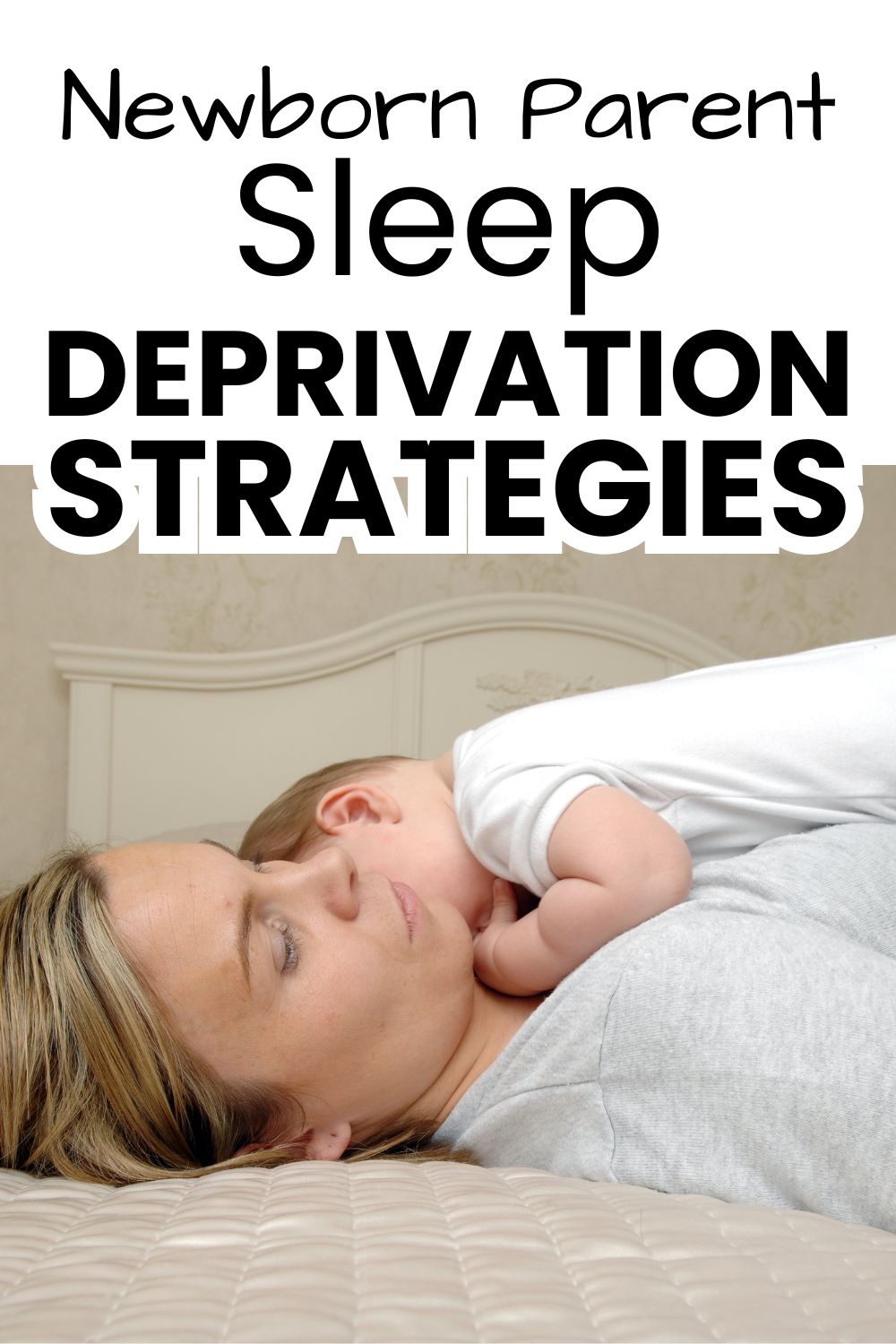
Newborn sleep deprivation is brutal. Here’s how to build a rhythm that helps baby sleep better AND protect the sleep you desperately need in the meantime.
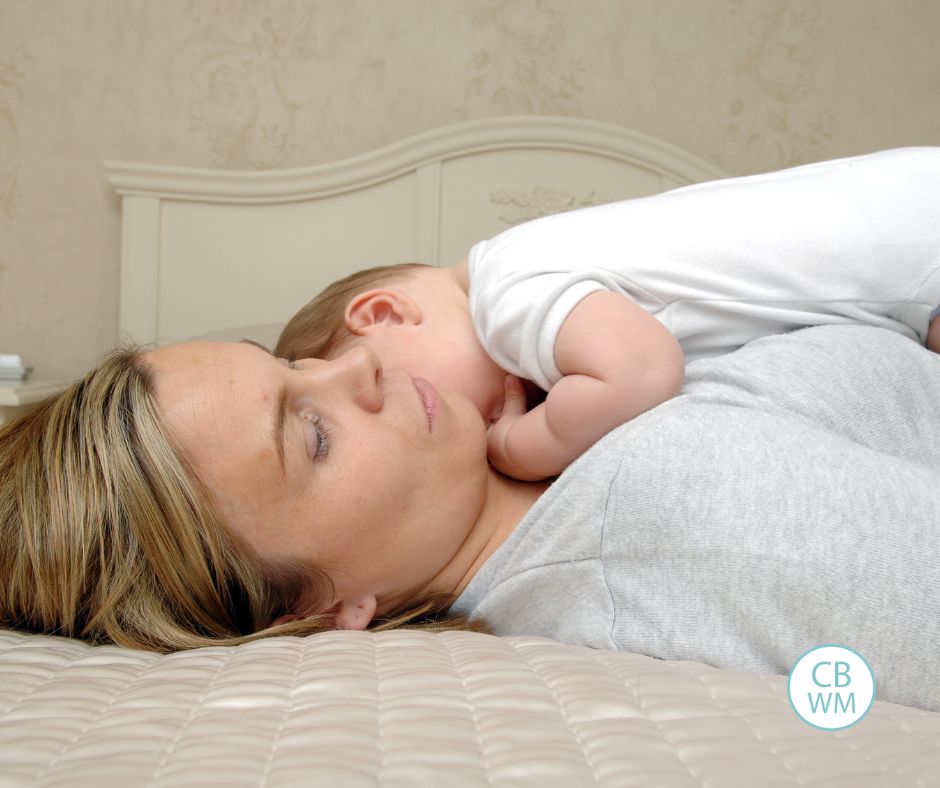
If you’re reading this with one eye open while a baby snoozes on your chest (or cries two rooms away), welcome. You are in the thick of it. Newborn sleep deprivation is one of those things nobody can fully explain to you before it happens — you can hear “sleep when the baby sleeps” a hundred times and still be blindsided by what it actually feels like to function on broken two-hour stretches for weeks on end.
The good news is that you’re not just at the mercy of it. There are real strategies — some about your baby’s sleep, some about your own — that can take the edge off the exhaustion while you’re in the newborn fog. This post walks through both sides of that: how to get your baby sleeping in a way that gives you more predictable breaks, and how to protect and maximize your own sleep and sanity in the meantime.
Table of Contents
- Why Newborn Sleep Deprivation Hits So Hard
- Get Your Baby on an Eat/Wake/Sleep Rhythm
- Protect Your Own Sleep Opportunities
- What to Do When You’re Too Wired to Sleep
- Share the Load (Even When It Feels Hard To)
- Watch for Signs You Need More Support
- When Does It Get Better?
Why Newborn Sleep Deprivation Hits So Hard
Newborns aren’t broken sleepers — they’re just not wired the way we are yet. A newborn typically needs 8-10 feedings and 6-8 naps in a 24-hour period, and night sleep gets broken up by those feedings no matter what you do. On top of that, your baby is born with high levels of melatonin borrowed from you in utero, and that supply disappears within the first week or so. Their own melatonin production doesn’t really kick in until around 6 weeks, and it stays low until 12-16 weeks. That’s a big part of why the newborn stretch feels so relentless — baby’s internal clock genuinely hasn’t caught up yet.
For you, that means your own sleep gets chopped into unpredictable pieces right when your body is recovering and your hormones are in flux. It’s not just that you’re tired. It’s a specific, disorienting kind of tired that affects your patience, your memory, and even your ability to fall asleep when you finally get the chance. I remember with my own newborns feeling like I could barely form a sentence by hour three of being awake, and that fog is completely normal — it doesn’t mean you’re doing anything wrong.
Get Your Baby on an Eat/Wake/Sleep Rhythm
One of the most protective things you can do for your own sleep is to help your baby’s days and nights become more predictable as early as possible. This is the heart of the Babywise approach: instead of nursing or feeding your baby to sleep every time, you move through an eat/wake/sleep (EWS) cycle — feed, then a short awake stretch, then sleep — rather than sleep/eat/wake. Over time this helps baby learn to fall asleep independently instead of needing to be fed all the way down, which matters enormously for your own sleep once night stretches start to lengthen.
>>>Read: Newborn Routines: Sleep, Schedules, and Play
In the very early weeks, wake windows are short — often just long enough to change a diaper and get a little face time before baby is ready to go back down. That’s normal, and it’s not a schedule you need to force. It’s simply a rhythm you can lean into so your days stop feeling so random.
>>>Read: Complete Newborn Sleep Guide: Week-by-Week Schedules for 0-13 Weeks
If your baby’s days and nights currently seem completely flipped — wide awake and alert at 2am, sleepy all day — that’s fixable, and fixing it will do more for your sleep than almost anything else on this list.
>>>Read: Fix Your Baby’s Day/Night Confusion
Protect Your Own Sleep Opportunities
“Sleep when the baby sleeps” gets a bad reputation because it’s often unrealistic advice — you also need to shower, eat, and occasionally feel like a person. But it’s worth being intentional about at least one nap window a day that’s protected just for you, especially if you have help available. Hand the baby off, close the blinds, and treat that stretch as non-negotiable rest rather than catch-up time for laundry.
It also helps to think about your own sleep debt the same way you’d think about your baby’s. Just like a baby who’s missing sleep accumulates a deficit that snowballs if it’s not addressed, the same is true for you — the tiredness compounds day over day rather than resetting overnight.
>>>Read: How to Fix Your Child’s Sleep Deficit
A dreamfeed — a feeding you do late in the evening before you go to bed, without fully waking baby — can also buy you a longer first stretch of sleep before the next wake-up, which matters more than it sounds like it would when every hour of unbroken sleep counts.
>>>Read: The Basics of a Dreamfeed
What to Do When You’re Too Wired to Sleep
Here’s the part that catches a lot of new moms off guard: you’d think being exhausted would make falling asleep easy, but it often does the opposite. Your brain can feel wired and overstimulated even when your body is completely depleted, so you lie there “too tired to fall asleep” during the exact windows you were counting on to rest.
If that’s happening to you, you’re not alone. This was the HARDEST thing for me with newborns. Even when I had newborns who were amazing sleepers, I struggled sleeping. There are things that genuinely help — from how you set up your pre-sleep routine to what you do with your mind in those first few minutes lying down.
>>>Read: Falling Asleep Tips for the Sleep-Deprived Mother
If you have a partner, family member, or friend who can take a shift — even a single two-hour block — take it. It’s common for moms to feel like they should be able to handle everything, especially in those first weeks, but sleep deprivation is cumulative and it doesn’t resolve itself just because you’re tough. Handing baby off for a feeding (with a bottle of pumped milk or formula) or simply for a supervised nap in another room is not a failure. It’s what lets you function for the rest of the day.
If visitors or houseguests are adding chaos on top of the exhaustion, it’s okay to set boundaries there too — let them help with baby during your protected sleep window rather than just holding baby while you do dishes.
>>>Read: How To Expertly Manage Disruptions to Your Baby Routine
Watch for Signs You Need More Support
Regular newborn exhaustion is heavy, but it’s different from something that needs professional attention. If you’re noticing persistent sadness, anxiety, or feelings that go beyond “I am so tired,” please talk to your doctor or midwife. Sleep deprivation and postpartum mood changes can feed into each other, and getting support early makes a real difference — for you and for your baby.
>>>Read: Postpartum Depression Can Happen To Anyone
When Does It Get Better?
Most families see a real shift around 6-8 weeks, when melatonin production starts to reappear and babies begin consolidating sleep into longer stretches. By around 4 months, many babies are developmentally ready to start learning more independent sleep skills, which is often when parents feel like they finally get a real night back.
>>>Read: 5 Sleep Training Tips That Actually Work (From a Mom of Four)
Until then, be gentle with yourself. The newborn stage asks a lot of you physically and emotionally, and “surviving” it well doesn’t mean doing it without help or without naps of your own. Lean on the people around you, protect the sleep you can get, and know that this specific kind of tired is temporary, even on the days it doesn’t feel that way.
Related reading: Sleep hub — all newborn and baby sleep posts
Related Posts
- Mama, When Life Gets Hard, Slow Down
- A real mom’s experience with postpartum depression
- Postpartum Real Life: What is it like?
- Postpartum Survival Tips for New Moms
- Postpartum Emotions: the Emotional Roller Coaster Ride