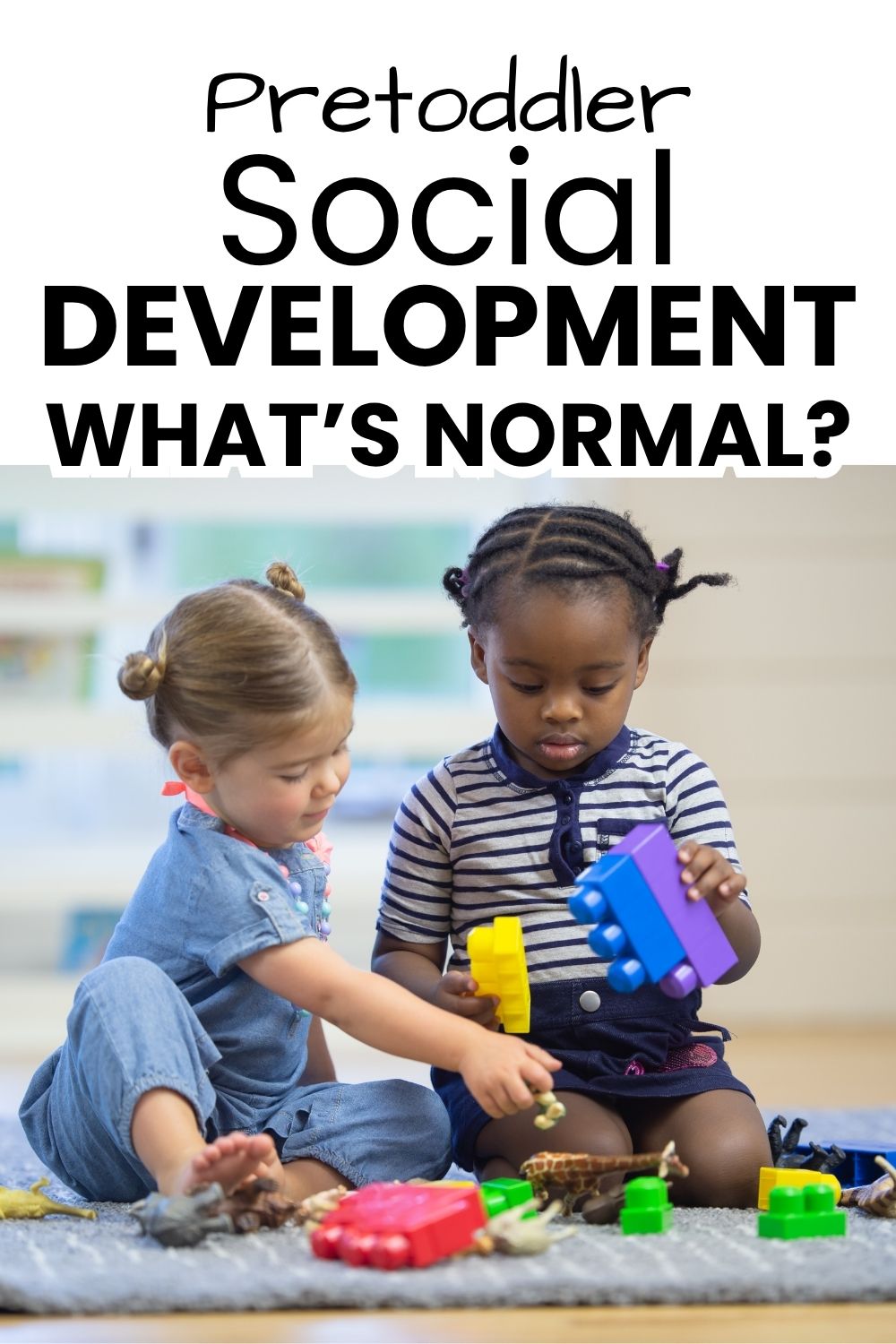
Wondering if your pretoddler’s clinginess, parallel play, and “mine!” moments are normal? Here’s what social development really looks like from 12 to 18 months, and when to check in with your pediatrician.
If you have a one-year-old at home, you might have noticed something delightful: your baby has suddenly become a person. A person with opinions, favorites, and a very clear idea of who gets to hold which toy.
In Babywise language, the months between twelve and eighteen are the pretoddler stage. Your child isn’t quite a baby anymore, but they are not a full-blown toddler either. They are standing on a bridge between the two, and the social changes that happen on that bridge seem dramatic. One week, your little one is happily playing alone in the playpen. The next, they are clinging to your leg at the church nursery door and yelling, “no!” at a perfectly nice grandmother.
Almost all of it is normal. Let’s walk through what you can realistically expect, month by month, so you can stop second-guessing and start enjoying this stage.
>>>Read: Everything You Need to Know for Your PreToddler
PreToddler Social Development at 12 Months Old
At twelve months, social skills are still very much relationship skills. Your baby is learning how back-and-forth works, and you are their favorite playmate.
The CDC’s milestone checklist lists playing simple games with you, like pat-a-cake, as a social marker at this age. That’s the heart of it: your one-year-old wants to interact with you. They will hand you a toy, wait for your reaction, and hand it to you again. They will wave, babble at you like they are telling a long story, and light up when you play peekaboo.
Don’t worry if your baby is far more interested in grown-ups than other babies at this point. That’s developmentally right on track. Peers come later.
PreToddler Social Development at 15 Months Old
Around fifteen months, you’ll start to see your child take notice of other children, even if they are ready to share a sandbox with them.
According to CDC-based milestone lists, this is the age when many children begin copying other kids while they play. They might pull toys out of a container after watching another child do it. They will also show you objects they like, clap when they are excited, hug a stuffed animal or doll, and give affection in the form of hugs, cuddles, or kisses.
Isn’t this sweet? This is the age when you may catch your little one “nursing” a teddy bear or patting a doll’s back. That is early empathy and imitation at work, and it’s one of my favorite things to watch.
It’s also a stage when strong feelings show up fast. Your child can feel big joy and big frustration in the same five minutes, but doesn’t yet have the words or self-control to handle either one gracefully. We’ll talk about that in a minute.
PreToddler Social Development at 18 Months Old
By eighteen months, your pretoddler is rapidly becoming a little explorer with a built-in home base: you.
The CDC milestones for this age include moving away from you but looking back to make sure you’re still close, pointing to show you something interesting, holding out their hands for you to wash them, looking at a few pages of a book with you, and helping you get dressed by pushing an arm through a sleeve or lifting a foot.
That “move away and look back” behavior is such a good picture of healthy attachment. Your child is confident enough to venture out because they trust you are there. And pointing is a big deal socially. When your child points to show you a dog, a plane, or a very interesting crumb on the floor, they are saying, “Look at this with me!” That is called joint attention, and it is one of the most important building blocks of social and language development.
>>>Read: Benefits of Independent Play
Playdates and Parallel Play: Why Your Pretoddler Isn’t Being Rude
Here is one that trips up a lot of new moms. You arrange a playdate, picture two tiny best friends giggling over blocks, and instead your child ignores the other kid completely, or worse, snatches a toy and walks away.
This is normal. Really.
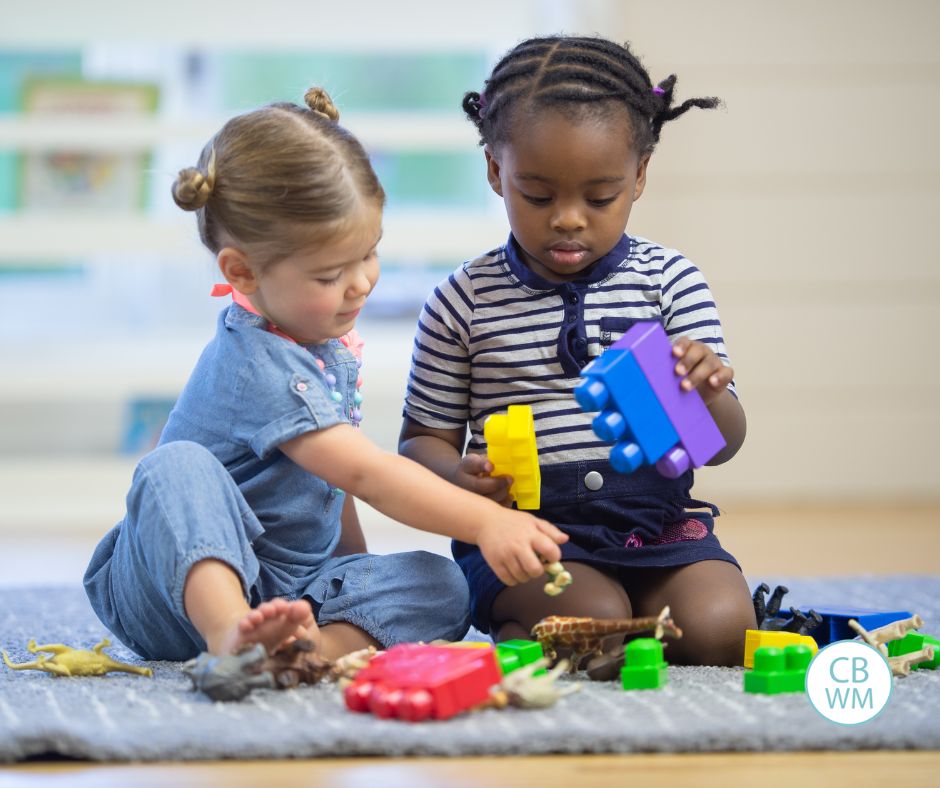
Pretoddlers tend to play alongside each other rather than with each other, which is often called parallel play. They notice each other. They may watch, imitate, or wander over to inspect what the other child is doing. But true cooperative play, where two kids work on something together and take turns, usually doesn’t show up until closer to the preschool years. Even at thirty months, the CDC describes children as playing next to other kids and sometimes with them.
So if your 15-month-old is happily stacking cups two feet away from a friend and never once making eye contact, you are not raising an anti-social child. You are raising a one-year-old.
So should you still do playdates at this age? Yes for sure! Things can be learned, there is a change of scenery, and mom gets to socialize, too. Happy moms lead to happy kids.
A few things can make social time go more smoothly at this age:
Keep playdates short and well-timed. Schedule them right after a nap, when your child is fed and rested, not at the tail end of a long morning. At this age, I also scheduled playdates for Brayden after his independent playtime. Having independent play was crucial to his day.
Make sure kiddos are not hungry. A pretoddler who is hungry or overtired has zero capacity for social graces.
Watch playtime to monitor conflict over toys. Think of yourself like a coach. Kiddos this age cannot play unsupervised without issues popping up. If the kids are fighting over a toy consistently, either work on taking turns or just remove the toy from play for the day.
The “Mine!” Phase, Biting, and Other Messy Moments
The pretoddler stage is not all hugs and pat-a-cake. Possessiveness, grabbing, hitting, and even biting are common at this age. They usually say far more about your child’s limited self-control than about their moral character.
Your pretoddler is growing a sense of “me” and “mine,” but no sense yet of why someone else might want a turn. They cannot reliably put big feelings into words. So when frustration hits, it often comes through their hands or mouth.
That doesn’t mean you ignore it or allow it to happen. It means you respond calmly, consistently, and often. Get down on your child’s level, stop the behavior, and use a few simple words to redirect your child. Lengthy lectures will not be understood by this age group. Be consistent in how you respond and what you say. You are laying the groundwork for self-control.
If one particular situation keeps setting things off, such as a crowded playgroup or a hungry, tired child, look at the conditions before you worry about the behavior. This goes back to making sure you do a playdate at a good time of day for your child.
If your child is being aggressive toward another child, remove your child from the situation. Even if your child is tired or it is “normal” behavior, the other child doesn’t deserve to be hit or bitten. You might even just need to cut the playdate short and go home.
Separation Anxiety and Stranger Wariness
If your pretoddler suddenly turns into a baby monkey attached to you, you’re in good company. Clinginess and wariness of unfamiliar people are very common through this stage, and sometimes they get stronger right when you think they should be getting better.
Remember that “move away, then look back” milestone at eighteen months? Your child is practicing independence while still needing reassurance that you’re their safe place. Some days they’ll march confidently into a room. Other days, they’ll want to be on your hip, and that’s okay too.
A few simple habits help. Keep goodbyes brief, warm, and predictable. Resist the urge to sneak out, since that can erode trust. Give your child a little time to warm up in new places before expecting them to jump in. And let them watch you interact happily with new people, because they take their cues from your face.
How Your Schedule Shapes Your Pretoddler’s Social Skills
This is where the Babywise approach really shines, because social development doesn’t happen in a vacuum. A well-rested, well-fed child is far more able to be patient, curious, and cooperative.
Think of the pretoddler’s day as a rhythm of eating, activity, and sleep. When that rhythm is predictable, your child knows what to expect, and that sense of security gives them more energy to spend on learning how to be around other people. When it’s chaotic, the first thing to go is usually their emotional regulation.
This matters especially during the nap transition from two naps to one, which commonly falls somewhere in this 12-to-18-month window. Many parents notice a bump in crankiness, whining, and short-fuse social moments while their child is adjusting. If your sweet, social baby has suddenly turned into a grumpy little stranger, check the nap situation before you assume something is wrong socially. A few weeks of patience and a steady routine often bring your cheerful kiddo right back.
Independent playtime counts here too. A child who is comfortable playing on their own is actually better equipped for healthy social interaction, not worse. They can entertain themselves, handle a few minutes without constant attention, and approach other children from a place of security rather than need.
That doesn’t mean your child will always be an angel. I had one child who was especially sensitive to her sleep schedule and playdates. If I kept her at a playdate into her nap time, she almost always hit another child. So I just made sure we did not stay beyond her nap time.
When to Talk to Your Pediatrician
Anytime we talk about milestones, we worry about milestones being met and what it means if our kids do nto meet them.
Every child moves at their own pace, and the milestones above describe what most children do, not a pass-or-fail test. The CDC defines milestones as skills that about 75 percent of children can do by a given age, and they encourage parents to speak up early rather than wait and see.
So trust your gut. It’s always okay to bring up a concern at your next well-child visit, or sooner if something feels off. You’ll especially want to mention it if your child isn’t making eye contact much, doesn’t respond to their name, isn’t pointing or showing you things by around eighteen months, doesn’t seem interested in interacting with you or other people, or has lost skills they once had.
The point of a well-child visit isn’t just to say everything is great and go home. It is okay to bring up concerns.
Raising a question doesn’t mean something is wrong. It just means you’re an engaged mama who is paying attention, and your pediatrician would much rather hear from you than not.
Conclusion
The big takeaway is this: the pretoddler years are going to be a little bumpy socially. The clinginess, the parallel play, the fierce “mine!”, the sudden cuddles for a stuffed bunny, it’s all part of a little person figuring out how to be in a world full of other people.
Your job isn’t to make it perfect. It’s to be a steady, loving home base, keep a predictable rhythm to the day, and gently coach your child through the hard moments. Social skills are built in thousands of small, ordinary interactions, and you’re giving your child plenty of them every single day.
Related Posts
- How Your Child’s Behavior is Tied to Food and Sleep
- How to Handle an Aggressive Toddler
- Logical Consequences to Stop Kids Hitting and Biting