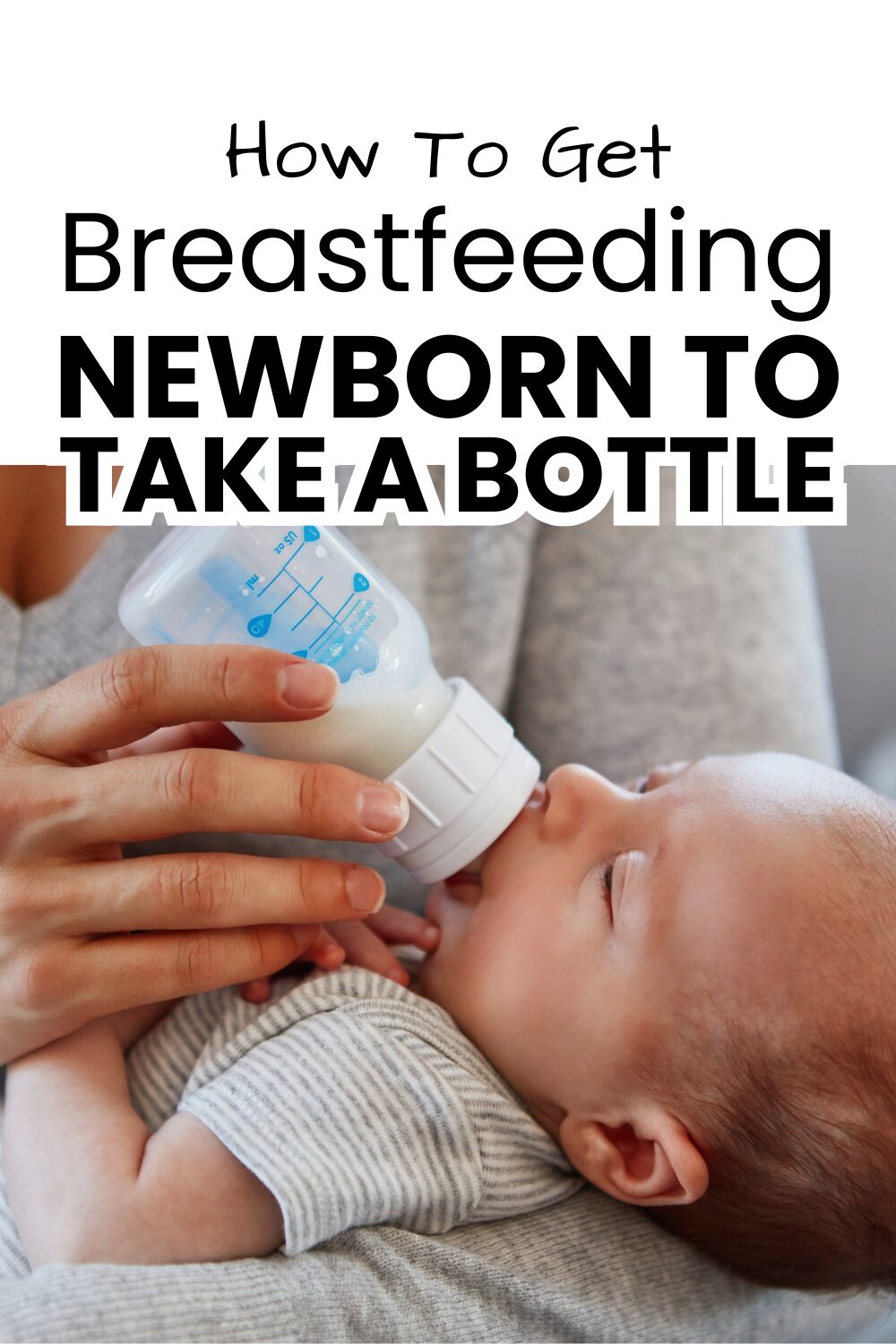
You’ve committed to breastfeeding, but you also want your newborn to accept a bottle when needed. Here’s how to introduce a bottle early so you avoid the dreaded bottle refusal down the road.
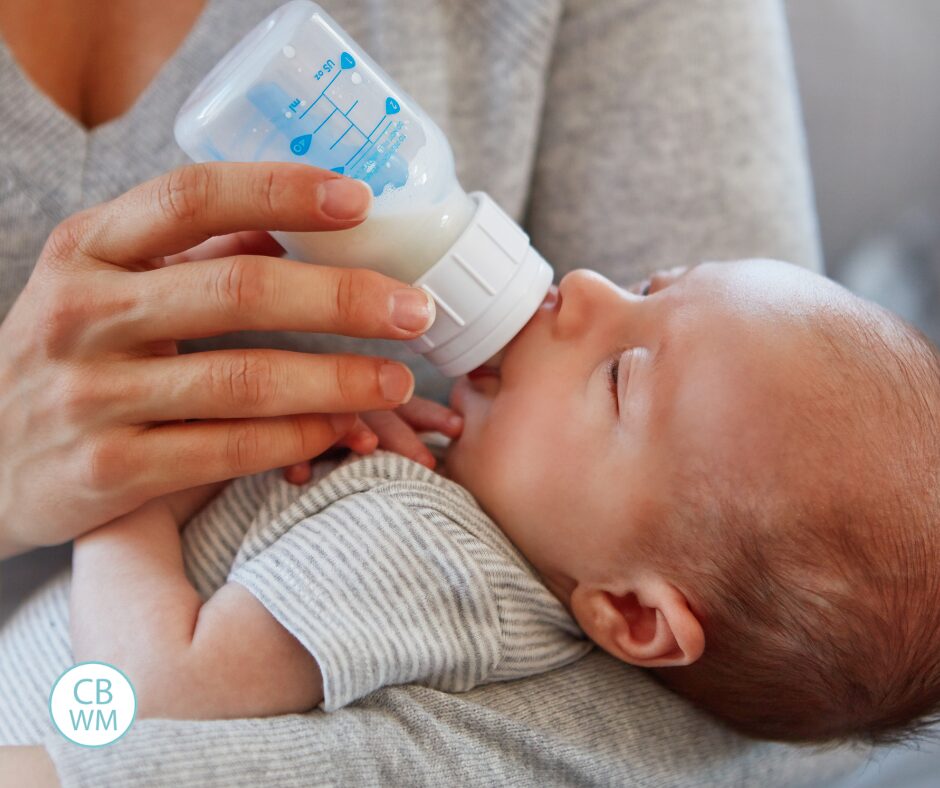
If you are breastfeeding your newborn, I want to give you one piece of advice right now, before you even finish reading this post:
Give your baby a bottle.
Not instead of breastfeeding. Not to replace nursing. Just occasionally — and starting early — so that your baby knows how to do both.
I say this from experience and from years of watching moms in the trenches. The number one breastfeeding-related struggle I hear from readers is this: My baby won’t take a bottle. And almost always, the reason is that the bottle was never introduced early enough or introduced consistently enough to stick.
The good news is that with newborns, you have a real window of opportunity. Newborns are typically much more flexible than older babies. A two-week-old doesn’t yet have the strong opinions a two-month-old has. Use that to your advantage.
Here is how to get your breastfeeding newborn to take a bottle — and how to keep it that way.
Why You Should Introduce a Bottle Even If You Plan to Exclusively Breastfeed
I am a breastfeeding advocate. I nursed all four of my children. But I also believe strongly that bottle flexibility is important even for exclusively breastfed babies.
Here’s why:
Life is unpredictable. You may need to go back to work. You may have a medical situation. You may simply want your husband to be able to feed the baby while you sleep for a few hours. If your baby only knows how to nurse, any of these situations becomes a crisis.
Your mental health matters. Being the only person who can feed your baby at any hour of the day or night is exhausting. Having the option — even if you rarely use it — can make a real difference in how you feel.
Weaning is easier. When the time comes to wean, babies who have already accepted a bottle have a much smoother transition.
I recommend that breastfeeding moms give their baby a bottle on occasion. You don’t have to do it at every feeding. Once a day or even a few times a week is enough to keep the skill fresh.
When to Introduce the Bottle
The timing of bottle introduction is a genuinely debated topic, and I want to give you an honest answer: there is no perfect universal answer, but there is a general window that tends to work well.
Most lactation consultants recommend waiting until breastfeeding is well established before introducing a bottle — typically around 3–4 weeks. The concern before that point is nipple confusion or preference, where baby finds the bottle easier and starts to reject the breast.
That said, Tracy Hogg (The Baby Whisperer) recommends introducing the bottle as early as three weeks old to avoid bottle refusal later on. That aligns with what I have seen work well in practice.
My recommendation: Introduce a bottle somewhere between 3–6 weeks old. If you are past that window, don’t panic — it is still very possible to get your baby to accept a bottle. It may just take more patience and consistency.
What you want to avoid is going months without ever offering a bottle and then suddenly needing your baby to take one. That is where the real struggle begins.
How to Introduce the Bottle to a Breastfeeding Newborn
1. Start at the Right Time in the Feeding Cycle
Timing matters. If your baby is starving and frantically rooting, that is not the moment to introduce something new. Baby will be too frustrated to experiment.
Offer the bottle when your baby is calm, alert, and hungry — but not yet at the point of desperation. You want baby in that sweet spot where he’s motivated to eat but still patient enough to figure something new out.
2. Use Pumped Breast Milk
When you are first introducing the bottle to a breastfed newborn, fill it with your pumped breast milk rather than formula. The taste will be familiar, which removes one variable from the equation. If baby later needs formula, you can work on that transition separately. If your baby is predictable with their routine right now, pump milk at the the end of their nap so you have fresh, warm milk to work with.
3. Choose the Right Nipple
Nipple shape matters more than most people realize. Look for a bottle nipple that closely mimics the shape of the breast — a wider base that requires baby to open his mouth similarly to how he does when nursing.
Some popular options that breastfeeding moms have had success with include Avent, Comotomo, Lansinoh, and Nanobebe. I used Avent bottles with both Brayden and Kaitlyn successfully.
Once you find one your baby accepts, stick with it. Don’t keep switching. Consistency is more important than finding the “perfect” bottle.
4. Start with a Slow-Flow Nipple
For a newborn, always use a slow-flow (level 1) nipple. Breastfed babies are used to working for their milk. A fast-flow nipple can be overwhelming — or worse, so easy that baby starts to prefer the bottle over the breast, which is what we are trying to avoid.
A slow-flow nipple keeps the experience more similar to nursing.
5. Have Someone Else Offer the Bottle
This tip is huge and often overlooked.
If mom offers the bottle, many babies will simply refuse. Why settle for a substitute when the real thing is right there? Baby can smell you. Baby knows you have what he wants.
Have your husband, a grandparent, or another caregiver be the one to offer the bottle — at least in the beginning. Mom should ideally be out of the room, or at least out of sight.
This is not because your baby doesn’t love you. It is because your baby loves you very much and will hold out for what he prefers if he knows it is available.
6. Warm the Milk
This seems like a small thing, but temperature matters. Breast milk is warm when it comes from the source. A bottle of cold refrigerated milk can be surprising and off-putting to a newborn.
Warm the bottle by placing it in a cup of hot water for a few minutes before offering it. You don’t need a fancy bottle warmer for a newborn, though they are convenient.
Always test the temperature on your wrist before giving it to baby.
7. Try Different Positions
Some babies accept the bottle more readily when they are not held in the typical nursing position. If you have been cradling baby in your arms to try the bottle, try switching it up.
Some options to try:
- Sitting baby upright on your lap, facing away from you, and offering the bottle from in front of him
- Paced bottle feeding — holding baby at more of an incline so the milk flows more slowly, similar to nursing
- Skin-to-skin — some babies are soothed enough by skin contact that they will accept the bottle more readily
There is no single right position. Try a few and see what your baby responds to.
8. Let Baby Lead the Latch
Don’t force the nipple into baby’s mouth. Instead, brush the nipple against baby’s lips and wait for him to open up. This mimics what happens at the breast and makes the whole experience feel more natural.
If baby clamps down or turns his head away, don’t push it. Take a short break and try again.
9. Be Consistent
This is probably the most important tip on the list.
If you want your newborn to accept a bottle, you need to offer one regularly. Once a day or several times a week is ideal. If you offer a bottle once, get a rejection, and then don’t try again for two weeks, you are essentially starting over every time.
Consistency is what builds the skill and the habit. Even if baby isn’t thrilled about it at first, regular practice helps him become comfortable with it.
What to Do If Baby Refuses the Bottle
If your newborn is refusing the bottle, here are some things to troubleshoot:
Try a different nipple. Sometimes this really is all it takes. Some babies are particular. If you have been using one brand and baby is consistently resistant, try a different shape.
Check the flow rate. If baby is sputtering or pulling off the bottle repeatedly, the flow may be too fast. Try a different nipple.
Adjust the temperature. Try offering the milk slightly warmer or slightly cooler than you have been.
Try when baby is drowsy. Some babies accept the bottle more readily when they are in that sleepy, half-awake state right after waking up from a nap. They are not alert enough to protest.
Keep sessions short. If baby refuses after a few minutes of trying, stop and try again later. A frustrated baby is not going to suddenly change his mind. You are not giving up by stopping — you are setting up the next attempt for more success.
Stay calm. Babies are perceptive. If you are tense and anxious about the feeding, baby can feel that. Take a breath. Keep the experience as low-pressure as you can.
How Often Should You Offer the Bottle?
Once your newborn is accepting the bottle, you don’t have to use it at every feeding. The goal is simply to maintain the skill.
Offering a bottle once a day or a few times a week is typically enough to keep baby comfortable with it. You can offer it at any feeding in your routine. Some moms find it easiest to make the evening feeding a bottle feeding consistently, since that also allows dad to be involved and gives mom a break. For my oldest two kids, I just gave them one bottle each week and that was enough for them.
Whatever you choose, make it a habit you can stick to. Inconsistency is the biggest reason breastfed babies lose the ability to take a bottle.
A Note on Nipple Confusion
Some moms worry about nipple confusion — the idea that introducing a bottle will cause baby to reject the breast.
This is a real concern, and it is worth being thoughtful about. It is one reason why the type of nipple you choose matters (look for a breast-shaped, wide-base nipple) and why slow flow matters (you don’t want the bottle to become the easier, preferred option).
That said, if you follow the guidance in this post — introducing the bottle around 3–6 weeks, using a slow-flow nipple, keeping breastfeeding as the primary feeding method — most babies will do just fine with both.
The risk of nipple confusion is generally lower than the risk of bottle refusal if you wait too long. In my observation, bottle refusal causes far more stress for families than any temporary breastfeeding confusion from bottle introduction.
Conclusion
Breastfeeding is wonderful. I am all for it. But I also believe that a breastfed baby who can also accept a bottle gives you options — and options reduce stress.
If you are in the newborn stage right now, this is your window. Start offering that bottle in the next few weeks. Keep at it consistently. Find the nipple that works for your baby and stick with it.
You do not have to choose between breastfeeding and bottle feeding. Your baby can — and ideally should — know how to do both.
Related Posts:
- STOP Baby Biting When Breastfeeding
- Nursing Strikes: Causes and What to Do
- High Lipase in Breastmilk: Why and What To Do
- Troubleshooting Common Breastfeeding Difficulties
- Success as a Mom is not measured by feeding method
- How to Successfully Introduce a Bottle to Your Breastfed Baby (Even When Starting Late)