
Exclusively breastfeeding but worried about bottle refusal? Whether you’re heading back to work or just want flexibility, teaching your baby to accept a bottle—even starting late—is possible. This guide shares 13 proven strategies to make it happen without the stress.
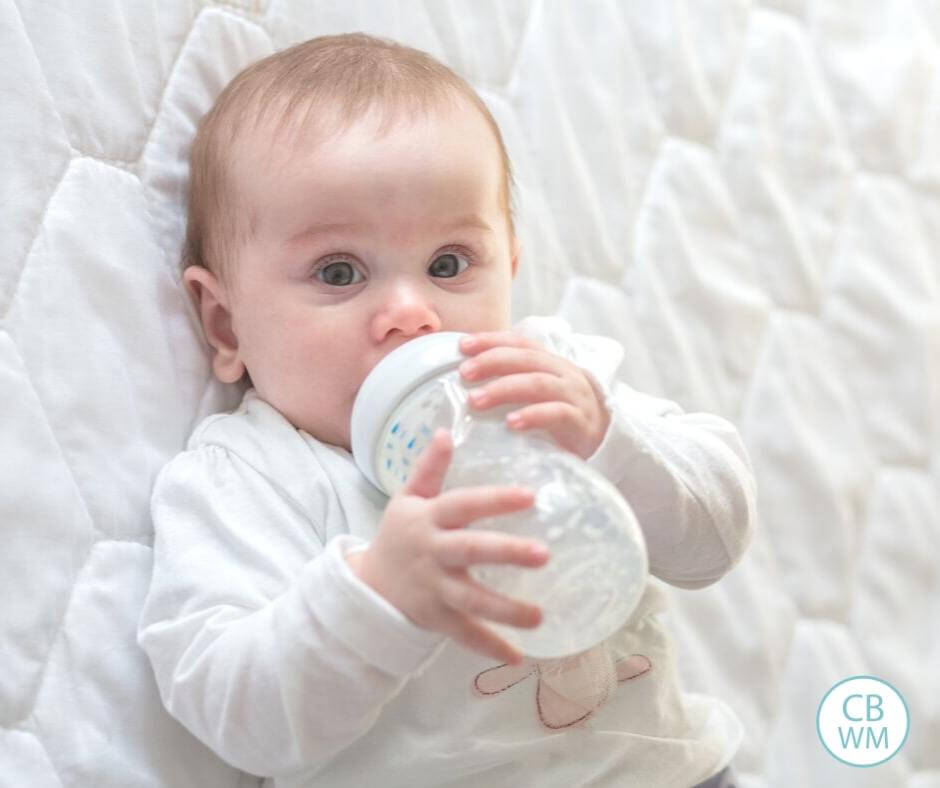
Many breastfeeding mothers find themselves in a difficult position: they’ve exclusively breastfed their baby for weeks or months, and suddenly they need their baby to take a bottle. Whether you’re returning to work, planning a much-needed date night, or facing an unexpected situation, a baby who refuses the bottle can create significant stress for the entire family.
The good news? Even if you’re starting “late” (after the first few weeks), you can successfully teach your baby to accept a bottle with the right strategies and patience. This comprehensive guide will walk you through proven techniques, troubleshooting tips, and expert advice to make bottle introduction successful at any age.
Why Even Exclusively Breastfed Babies Should Learn to Take a Bottle
If you are breastfeeding, I recommend you give your baby a bottle on occasion. For both of my oldest two kids, I gave a bottle of formula once a week. This way, they were accustomed to both the bottle and the taste of formula.
I did this because you don’t know what the future will hold.
You never know if you will lose your supply. You never know if you are going to have some sort of emergency and need to go away. You never know if you simply need some sanity back and want to go shopping or something through a feeding while your spouse or someone else takes care of the baby.
In case you are wondering, I never introduced a bottle to my youngest two. I think it just felt like more work than I could handle at that point.
With all of that said, here are reasons to introduce a bottle to your breastfed baby.
Life’s Unpredictability
Even with the best intentions to exclusively breastfeed for a year or longer, life can throw unexpected curveballs:
Medical Emergencies: You might require surgery or medication that’s incompatible with breastfeeding. Having a bottle-trained baby means you can focus on your recovery without the added stress of figuring out feeding logistics during a crisis.
Sudden Milk Supply Issues: Some mothers experience a sudden drop in milk supply due to illness, stress, hormonal changes, or pregnancy. If your baby already accepts bottles, transitioning to supplementation or formula becomes much less traumatic.
Unexpected Travel or Separation: Family emergencies, work obligations, or other circumstances might require you to be away from your baby for extended periods. A bottle-ready baby gives you flexibility when you need it most.
Mental Health and Self-Care: Postpartum depression and anxiety affect many mothers. Sometimes, having the option for someone else to handle a feeding can provide crucial mental health support and allow you to attend therapy appointments, exercise, or simply get adequate rest.
Career Flexibility: Even if you’re not planning to return to work immediately, introducing a bottle preserves your options. Many mothers find unexpected job opportunities or realize they need to return to work sooner than planned.
The Benefits of Flexibility
Beyond emergencies, bottle acceptance offers practical everyday benefits:
- Daddy Bonding: Allowing your spouse to handle occasional feedings strengthens their bond with the baby and gives them confidence in caregiving
- Easier Outings: Running errands, attending appointments, or enjoying social events becomes less complicated
- Better Sleep: Your spouse or a caregiver can handle the occasional nighttime feeding, allowing you to get longer stretches of sleep
- Gradual Weaning: When you’re ready to wean, having bottle acceptance already established makes the transition smoother for everyone
What Age Is Ideal for Introducing a Bottle?
The timing of when to start is debatable. I have read to not start before a certain age because the baby will find it easy and reject breastfeeding, but if you start too late, you risk the baby refusing a bottle altogether.
The “Goldilocks Window”
The timing of bottle introduction is genuinely debatable among experts, and there’s no one-size-fits-all answer. However, understanding the general timeline can help you make the best decision for your family:
Too Early (Before 3-4 Weeks)
- Risk: Nipple confusion is a real concern for some babies
- Challenge: Breastfeeding may not be fully established yet
- Benefit: Baby hasn’t developed strong preferences yet
- Best for: Mothers who know they’ll be returning to work very early or have scheduled separations
The Sweet Spot (3-6 Weeks)
- Why it works: Breastfeeding is usually established, but baby is still adaptable
- Expert recommendation: Tracy Hogg, author of Secrets of the Baby Whisperer, suggests introducing bottles by three weeks old, even for exclusively breastfed babies
- Success rate: Generally higher acceptance with less resistance
- Flexibility: Easier to maintain both breast and bottle feeding long-term
>>>Read: How to Get a Breastfeeding Newborn to Take a Bottle
Starting to Get Tricky (6-12 Weeks)
- Challenge: Babies are developing stronger preferences
- Reality: Many mothers wait until this point due to busy schedules or lack of awareness
- Approach needed: More patience and consistency required
- Still achievable: Most babies can still learn with the right techniques
Late Start (3+ Months)
- Challenge level: Higher resistance is common
- Time needed: May require 1-2 weeks of consistent effort
- Success factors: Persistence, the right nipple, and strategic timing become critical
- Important note: It’s never truly “too late,” but it requires more dedication
My Personal Experience
With my first child, Brayden, I introduced a bottle around one week old with no issues. He easily transitioned between breast and bottle throughout his first year.
Kaitlyn, my second, was a different story. I introduced the bottle at a few weeks old, but she absolutely hated it. She would cry, push it away, and refuse to eat. It took until she was around four months old before she would take a bottle without a fight. Looking back, I wish I had been more persistent and tried different approaches earlier.
With my youngest two children, life got busy with multiple kids, and I simply never got around to consistent bottle introduction. Fortunately, we never faced a situation where it was absolutely necessary, but the lack of flexibility was occasionally stressful.
Understanding Why Babies Refuse Bottles
Before diving into solutions, it’s helpful to understand the reasons behind bottle refusal:
Sensory Differences
Texture and Temperature: Silicone or latex nipples feel completely different from skin. The temperature of pumped or formula milk differs from body-temperature breast milk straight from the source.
Flow Rate Issues: Breast milk flow is baby-controlled and changes throughout a feeding. Bottles have a consistent flow that some babies find too fast, too slow, or simply wrong.
Taste Variations: Formula tastes different from breast milk. Even pumped breast milk can taste different depending on storage time, your diet, or lipase levels in your milk.
Emotional and Behavioral Factors
Comfort Association: Breastfeeding provides comfort beyond nutrition. Babies associate feeding with the warmth, smell, and heartbeat of their mother.
Preference for the Familiar: Once babies establish patterns, they often resist change. The older the baby, the stronger this preference typically becomes.
Not Hungry Enough: If offered a bottle when they’re only mildly hungry, babies may reject it simply because they can wait for their preferred feeding method.
Understanding these factors helps you address them strategically rather than just hoping the baby will “get over it.”
13 Proven Tips for Successfully Introducing a Bottle Late
Here are some tips to help you introduce the bottle to your baby!
1. Choose the Right Nipple Type and Shape
Why it matters: Nipple shape significantly impacts baby’s willingness to accept a bottle. The closer it mimics Mom’s anatomy, the better.
How to choose:
- Breast-shaped nipples: Look for wider-based nipples that require a similar mouth position to breastfeeding (Lansinoh, Comotomo, Avent, and Nanobebe are popular options)
- Consider nipple material: Some babies prefer silicone, while others like latex better
- Match your anatomy: If you have flatter nipples, a flatter bottle nipple might work better
Expert insight from Tracy Hogg: Once you find a nipple your baby accepts, stick with it. Consistency matters more than finding the “perfect” option (The Baby Whisperer Solves All Your Problems, pages 126-127).
My experience: Both Brayden and Kaitlyn used Avent bottles successfully. The moderately wide base worked well for our breastfeeding relationship, and the anti-colic valve system reduced gas issues.
2. Get the Flow Rate Right
The flow rate challenge: Too slow, and baby gets frustrated and gives up. Too fast, and baby may choke, gag, or develop a preference for the easier bottle over breast.
General guidelines (from Tracy Hogg, page 127):
- Slow flow (Level 1): If baby takes 20+ minutes to finish a typical feeding when breastfeeding
- Medium flow (Level 2): If baby finishes in 10-20 minutes
- Fast flow (Level 3+): If baby finishes in under 10 minutes (though this is rarely needed for young babies)
When breastfeeding: Most breastfed babies do well with slow or medium flow nipples, even as they get older. This prevents them from preferring the faster bottle flow.
Experimentation is key: If your baby seems frustrated or takes forever to feed, try a faster flow. If they’re gulping, choking, or milk dribbles out, try slower.
Don’t be fooled by age recommendations: Nipple packaging often suggests flow rates by age, but breastfed babies frequently need slower flows than formula-fed babies, regardless of age.
3. Start with the First Feeding of the Day
Why morning works best (Tracy Hogg, page 127):
- Baby is hungriest after the long overnight stretch
- You’re both typically more rested and patient
- There’s less accumulated frustration from previous attempts
- Baby’s survival instinct is strongest when genuinely hungry
Alternative perspective: Personally, I found that choosing a calm midday feeding worked better for my family. Morning feedings were often rushed or chaotic with other children around. The key is picking a time when:
- You can devote full attention without distractions
- You’re not stressed or rushed
- Baby is hungry but not overtired or overstimulated
4. Never Force It (The Five-Minute Rule)
Why forcing backfires: Forcing creates negative associations. Baby learns that bottle time equals stress, making future attempts even harder.
The five-minute rule (Tracy Hogg, page 128):
- Offer the bottle calmly and without pressure
- If baby refuses after five minutes of gentle encouragement, stop
- Wait until the next feeding time or even the next day to try again
- Five minutes may not sound like much, but in “baby time,” it’s significant
Reading baby’s cues:
- Mild resistance: Turning head, fussing slightly → Continue gentle encouragement
- Strong refusal: Crying, arching back, becoming upset → Time to stop and try later
Keep perspective: One refused feeding doesn’t mean failure. It’s data about what’s not working that you can use to adjust your approach.
5. Warm the Nipple to Body Temperature
The science: Babies are evolutionarily programmed to seek warmth. A cold or room-temperature nipple feels wrong to them.
How to do it (Tracy Hogg, page 128):
- Run warm (not hot) water over the nipple for 30-60 seconds before offering
- Test the temperature on your wrist like you would with the milk
- The nipple should feel warm to the touch, similar to human skin
Additional warming tip: You can also warm the entire assembled bottle in a bottle warmer or warm water bath before feeding. This ensures both the milk and the nipple are at an appealing temperature.
6. Use Breast Milk First (Pumping Strategy)
Why breast milk works better initially:
- Familiar taste reduces one variable
- Baby is more motivated to figure out the bottle mechanism
- You maintain supply while introducing bottles
My pumping approach:
- Timing: Pump 1-2 ounces right before the feeding you’ve chosen for bottle practice
- Freshness: Fresh milk tastes better than refrigerated or frozen milk for reluctant babies
- Temperature: Fresh pumped milk is already warm
Starting small: You don’t need a full feeding’s worth initially. Even getting baby to take 1-2 ounces from a bottle is progress.
The formula transition: Once baby accepts a bottle with breast milk, you can gradually introduce formula by:
- Mixing 75% breast milk with 25% formula
- Gradually increasing the formula ratio over several days
- Eventually offering pure formula if that’s your goal
7. Offer the Bottle Before the Breast
Strategic hunger: Offering the bottle when baby is genuinely hungry increases acceptance rates dramatically.
How to implement:
- Choose a feeding time when baby is hungry but not desperate
- Offer the bottle first for 5-10 minutes
- If baby refuses, offer the breast to ensure they don’t go hungry
- Over time, baby learns that the bottle leads to satisfaction
Balancing act: You want baby hungry enough to be motivated but not so starving that they have zero patience for something new.
8. Have Someone Else Offer the Bottle (Usually)
The conventional wisdom: Most experts recommend having someone other than Mom give the bottle, at least initially.
Why it often works:
- Baby doesn’t smell Mom’s milk nearby (babies have incredibly sensitive smell)
- Baby can’t see or sense the familiar food source
- There’s no confusion about why Mom is offering something “wrong”
- Some experts even suggest Mom leave the house entirely
My contrarian experience: Interestingly, when my babies were being particularly stubborn about bottles, they actually took them better from me. Perhaps my persistence and confidence came through, or maybe they sensed there wasn’t another option coming.
Best approach: Try both ways and see what works for your baby. Every baby is different.
Important note from Tracy Hogg (page 128): Once baby is comfortable with bottles, make sure Mom offers them sometimes too. You want baby to accept bottles from anyone, not just Dad or the babysitter.
9. Experiment with Positions
Different positions to try:
Traditional cradle hold: Similar to breastfeeding position, which can be comforting or confusing
Upright sitting: Baby sits up on your lap facing outward, which creates a different experience from breastfeeding
Walking and bouncing: Some babies accept bottles better when in motion
Side-lying: Less common but works for some babies
Facing outward at an angle: Baby is held more upright and can’t make as much eye contact, reducing the “this isn’t Mom” confusion
Looking at stimulation: Having baby face a mirror, window, or sibling while bottle feeding can distract from the unfamiliar sensation
My recommendation: If the breastfeeding position isn’t working, try something completely different to create a distinct “bottle time” experience.
10. Create a Consistent Bottle Routine
Why routines matter: Babies thrive on predictability. Creating a specific bottle ritual helps them know what to expect and can reduce anxiety.
Elements to consider:
- Location: Always sit in the same chair or area
- Environment: Similar lighting, noise level, and temperature
- Timing: Same time of day when possible
- Pre-feeding ritual: A specific song, phrase, or action that signals bottle time
- Position: Consistent holding position
Example routine:
- Prepare bottle in kitchen
- Sit in the living room rocking chair
- Sing the same simple song
- Offer bottle in the same position
- If refused, wait 2 minutes and try once more
- After 5 total minutes, offer breast instead
11. Pace Your Persistence (Frequency of Attempts)
Tracy Hogg’s aggressive approach (page 128): For urgent situations (returning to work soon, medical necessity), she suggests trying every hour on the first day.
When to use the hourly approach:
- You have a deadline (starting daycare next week)
- Medical situation requires bottle feeding
- You’re fully committed to the process
My gentler recommendation: For most families without urgent deadlines, trying at each regular feeding time or even once daily is sufficient and less stressful for everyone.
The balance: You want to be consistent enough that baby doesn’t “forget” between attempts, but not so frequently that everyone becomes frustrated and stressed.
Frequency guidelines:
- High urgency: Every 2-3 hours during waking hours
- Medium urgency: Once or twice daily at the same feeding times
- Low urgency/practice mode: 3-4 times weekly
12. Be Prepared for a Hunger Strike (And How to Handle It)
What is a hunger strike: Baby refuses all bottles and is willing to wait until they can breastfeed, even if it means being genuinely hungry for a while.
The conventional wisdom: Many experts say baby won’t starve themselves. If you’re consistent with offering only bottles, baby will eventually cave and eat.
Important context: This approach makes sense when:
- You’re completely weaning from breast to bottle
- You have a hard deadline (starting work Monday)
- You’ve tried everything else
- Baby is healthy and at a good weight
When to avoid hunger strikes:
- Baby is underweight or has feeding issues
- You’re not in a rush
- The stress is affecting your mental health
- You’re still building your breastfeeding relationship
My moderate approach: If baby refuses a bottle, I offer the breast after 5-10 minutes. I’d rather have a fed baby than force a showdown, unless circumstances absolutely require it.
If you do attempt a hunger strike approach:
- Make sure baby is healthy and well-hydrated
- Monitor diaper output (at least 6 wet diapers per day)
- Watch for signs of dehydration
- Consult your pediatrician first
- Set a limit (like 8-12 hours) before offering breast
- Many moms find the most success if they can take baby to someone like grandma to do the bottle feeding
13. Maintain Bottle Skills with Weekly Practice
The maintenance phase: Once your baby accepts a bottle, don’t let the skill fade.
Tracy Hogg’s recommendation (page 128): Offer a bottle daily to maintain the skill.
My practical alternative: For long-term breastfeeders, daily bottles are inconvenient and potentially impact supply. I found that offering a bottle once per week was sufficient to keep babies practiced without creating unnecessary work.
Weekly bottle benefits:
- Baby doesn’t forget the skill
- You maintain flexibility for emergencies
- Spouse can do one feeding per week
- You get a weekly break if desired
- Less impact on milk supply than daily bottles
What to offer:
- For younger babies: Pumped breast milk
- For babies 4+ months: Can be formula if you want to maintain dual feeding ability
- Amount: One full feeding
My Complete Bottle Introduction Strategy
Here’s the step-by-step approach I found most effective:
Step 1: Choose a calm feeding time when I’m not rushed (usually mid-morning or early afternoon)
Step 2: Pump 2-3 ounces of breast milk immediately before the feeding time
Step 3: Warm both the pumped milk and the nipple to body temperature
Step 4: Offer the bottle to baby before offering breast
Step 5: Stay calm and patient, trying for up to 5 minutes
Step 6: If baby refuses, offer breast to ensure they’re fed, then try again at the next feeding or tomorrow
Step 7: Experiment with who offers the bottle (me, husband, grandparent)
Step 8: Try different positions if the traditional one isn’t working
Step 9: Once successful, maintain with weekly bottle feedings
Step 10: Gradually introduce formula mixed with breast milk if that’s your goal
Common Mistakes to Avoid
Mistake #1: Giving Up Too Quickly
The problem: Many parents try once or twice, baby refuses, and they abandon the effort entirely.
The reality: Most “stubborn” babies need 5-10 attempts (or more) before accepting a bottle. Each refusal teaches you something about what’s not working.
Better approach: Commit to trying for at least 1-2 weeks before deciding your baby “just won’t take a bottle.”
Mistake #2: Only Trying When You Absolutely Need It
The problem: The first time you offer a bottle is the day before you start work or need to be away.
Why this fails: Baby senses your stress and urgency. There’s no time to experiment, adjust, or let baby adapt gradually.
Better approach: Start introducing bottles 2-4 weeks before you actually need baby to take them consistently.
Mistake #3: Changing Variables Too Frequently
The problem: Trying a different nipple, different formula, different person, and different position all in the same day.
Why this fails: You can’t identify what actually works or doesn’t work if you’re changing everything constantly.
Better approach: Change one variable at a time and try it for at least 2-3 feeding attempts before switching to something else.
Mistake #4: Offering the Bottle When Baby Isn’t Hungry
The problem: Trying to introduce a bottle 30 minutes after baby breastfed, or as a “snack.”
Why this fails: Baby has no motivation to work on something unfamiliar if they’re not hungry.
Better approach: Choose a regular feeding time when baby is genuinely hungry.
Mistake #5: Using Damaged or Inappropriate Nipples
The problem: Using nipples with holes that are too large, too small, or worn out from repeated use.
Why this fails: Flow problems can make bottle feeding frustrating or even dangerous (choking risk).
Better approach:
- Inspect nipples regularly for wear
- Replace nipples every 2-3 months
- Test the flow before each use
- Start with slow-flow nipples for breastfed babies
Mistake #6: Forcing the Bottle Into Baby’s Mouth
The problem: Physically pushing the nipple between baby’s lips or holding their head.
Why this fails: Creates negative associations and can actually make refusal worse.
Better approach:
- Tickle baby’s lips with the nipple to encourage them to open
- Wait for baby to show interest or open their mouth
- If they don’t, that’s information—they’re not ready yet
>>>Read: A Babywise Mom’s Complete Guide to Formula Feeding a Newborn
Frequently Asked Questions
Q: My baby is 6 months old and has never taken a bottle. Is it too late?
A: It’s never too late, but it may require more patience. At 6 months, you can also consider introducing a sippy cup or straw cup with expressed milk, which some babies find easier to accept than bottles. Many 6+ month babies successfully learn to drink from cups, bypassing bottles entirely.
Q: Can nipple confusion really happen?
A: Yes, but it’s less common than many people fear. Nipple confusion is more likely in the first 3-4 weeks before breastfeeding is well established. After that point, most babies can easily switch between breast and bottle. The key is ensuring baby has a good breastfeeding latch first.
Q: Should I try different brands of bottles?
A: Potentially, yes. Some babies have strong preferences for particular nipple shapes or materials. However, don’t go out and buy five different brands at once. Try one thoroughly (10+ attempts over several days) before purchasing another brand.
Q: How much should baby eat from a bottle?
A: For babies under 6 months, a general guideline is 2-2.5 ounces per pound of body weight per day, divided by the number of feedings. For example, a 10-pound baby typically eats about 20-25 ounces daily. If feeding 8 times per day, that’s roughly 3 ounces per feeding. However, these are averages—some babies eat more or less.
Q: Can I just exclusively breastfeed and skip bottles altogether?
A: Absolutely! Many families successfully exclusively breastfeed without ever introducing a bottle. However, be aware that this limits your flexibility and can create stress if unexpected situations arise where you need to be separated from baby.
Q: My baby takes a bottle from everyone except me. What should I do?
A: This is actually common! Baby associates you with breastfeeding and may refuse to accept a substitute. For practical purposes, this might be perfectly fine—caregivers can give bottles while you breastfeed. If you want baby to take bottles from you, try:
- Offering bottles in a position very different from breastfeeding
- Having someone else in the room
- Staying very matter-of-fact and unemotional about it
- Practicing when baby is only mildly hungry
Q: Does the bottle need to be warm?
A: Not necessarily! While many babies prefer warm bottles (similar to body-temperature breast milk), some are fine with room temperature or even cool milk. Breastfed babies are more likely to prefer warm bottles since that’s what they’re used to. Formula can be served at room temperature if baby accepts it, which is more convenient for outings.
Q: Can I mix breast milk and formula in the same bottle?
A: Yes! This can be a great strategy for bottle introduction. Start with mostly breast milk and gradually increase the formula ratio. However, only mix what baby will drink in one session—don’t store mixed bottles for later, as this can waste precious breast milk if baby doesn’t finish it.
Q: How long does bottle introduction usually take?
A: This varies enormously. Some babies accept bottles on the first try, while others need 2-3 weeks of daily attempts. Expect the process to take 1-2 weeks on average if you’re starting “late” (after 2 months). Younger babies typically accept bottles within 3-5 days. Babies over 4 months may need 2-3 weeks.
When to Seek Professional Help
While most babies eventually accept bottles with patience and the right techniques, sometimes professional guidance is needed:
Consult a lactation consultant (IBCLC) if:
- You’ve tried consistently for 3-4 weeks with zero progress
- Baby is losing weight or showing signs of dehydration
- You’re struggling with breastfeeding issues simultaneously
- Baby has unusual oral anatomy (tongue tie, lip tie, etc.)
- You need to return to work very soon and are feeling desperate
Consult your pediatrician if:
- Baby refuses all food (breast and bottle) for more than 8 hours
- You notice decreased wet diapers or signs of dehydration
- Baby seems to have pain while feeding from a bottle
- Baby has any medical conditions that might affect feeding
- You’re considering a “hunger strike” approach
Consider an occupational therapist specializing in feeding if:
- Baby has ongoing oral motor difficulties
- Baby gags excessively with bottles
- You suspect sensory processing issues
- Traditional bottle introduction strategies have failed completely
Conclusion: Patience and Flexibility Are Key
Introducing a bottle to a breastfed baby—especially starting “late”—can feel overwhelming. You might encounter resistance, tears (from both of you), and moments of doubt. But remember: thousands of parents have successfully navigated this challenge, and you can too.
The most important things to remember:
Start early if possible: The 3-6 week window is ideal, but it’s never too late to try.
Stay consistent: Regular practice matters more than perfect technique.
Keep perspective: Even if you’re dealing with bottle refusal right now, it’s not a reflection on your parenting or your baby’s personality.
Prioritize flexibility: Having a baby who accepts bottles gives you valuable flexibility for self-care, emergencies, and shared caregiving responsibilities.
Don’t give up: What feels impossible on day three often succeeds by day ten.
Most importantly, remember that introducing a bottle is an act of love. You’re giving your baby and your family more options and flexibility. You’re ensuring that if life throws a curveball, your baby will be able to eat and thrive. That’s something to feel good about.
Whether you’re preparing to return to work, hoping for a date night, or simply want the peace of mind that comes with having options, investing time in bottle introduction is worth it. Your future self—and your baby—will thank you.
Additional Resources
For more information on baby feeding, schedules, and parenting strategies, check out these related posts:
- 5 Things You Really Need to Know About Bottle Feeding: Essential bottle-feeding guidance for all parents
- Sample Baby Schedules by Age: Understanding your baby’s feeding patterns at different stages
- Starting Babywise Late Guide: If you’re implementing routines later than the newborn stage
About This Guide: This comprehensive guide draws on expert recommendations from Tracy Hogg’s The Baby Whisperer Solves All Your Problems and Secrets of the Baby Whisperer, combined with real parenting experience and modern research on infant feeding. Every baby is unique, so adapt these strategies to fit your family’s needs.
Medical Disclaimer: This information is for educational purposes only and doesn’t replace medical advice from your pediatrician or lactation consultant. Always consult healthcare professionals for personalized guidance about your baby’s nutrition and development.

This post first appeared on this blog in September 2009
