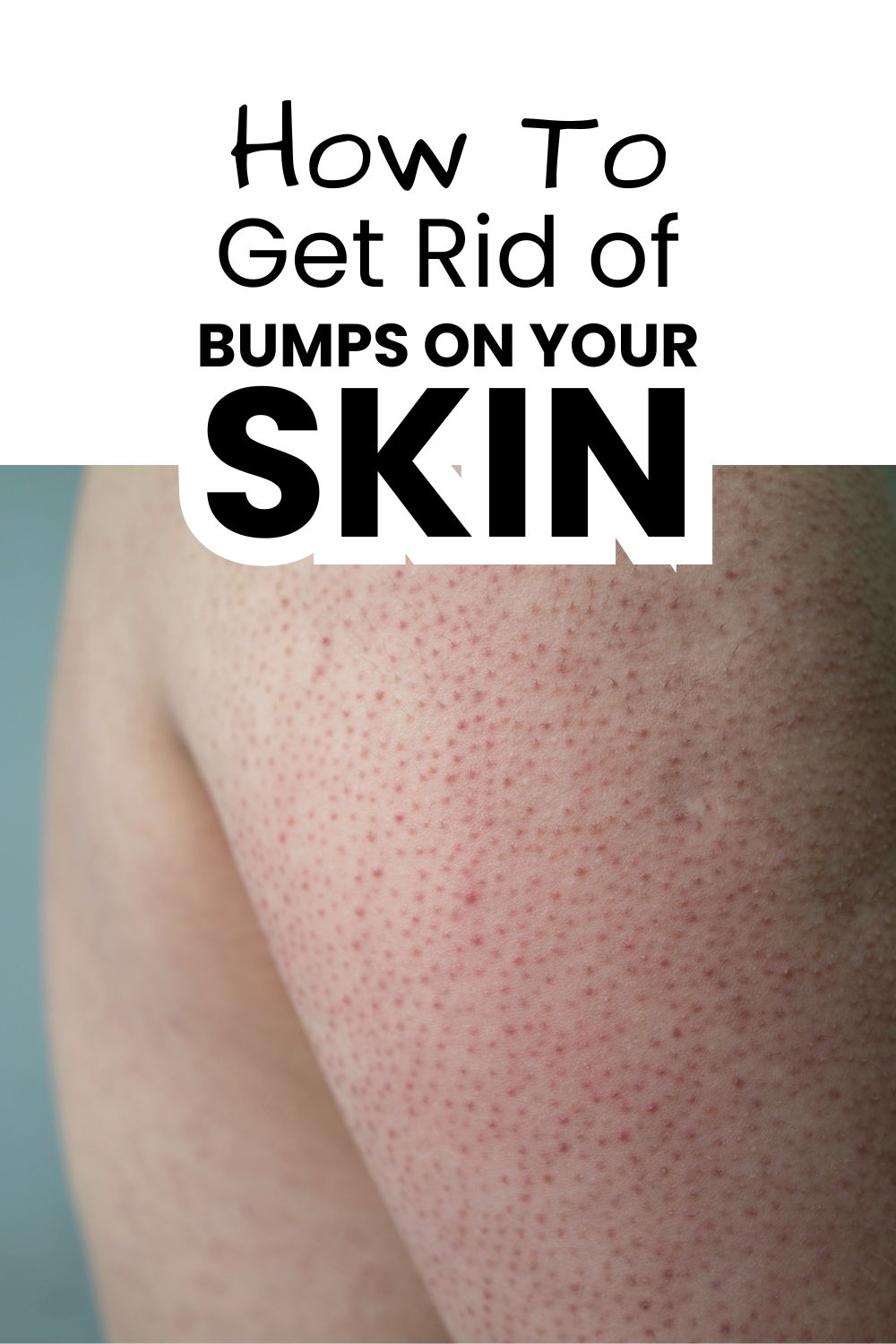
Wondering why you have tiny bumps on your arms or legs? Learn what keratosis pilaris is, what causes those rough skin patches, and simple, effective tips to smooth and care for your skin naturally. Simple things you can do to help treat your keratosis pilaris and get healthier skin! Help get rid of those pesky bumps.
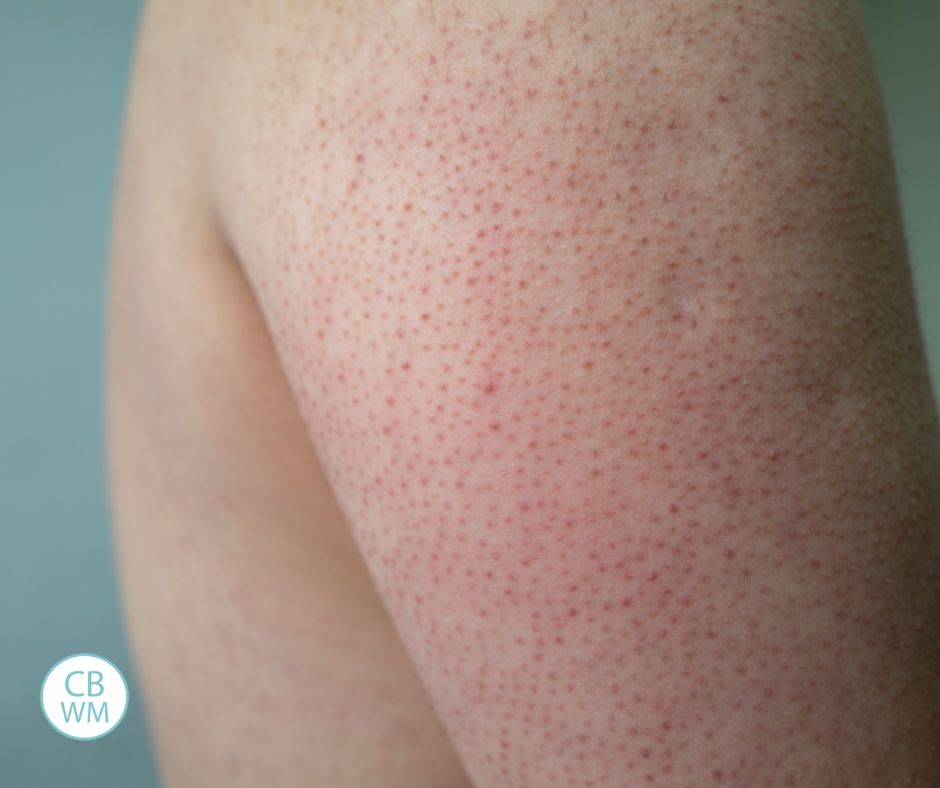
Keratosis pilaris (or also called follicular keratosis or sometimes “chicken skin”) is very common among people. Keratosis pilaris is those bumps you get on your skin. They are small, hard bumps. The color can be white, red, skin tone…colors can vary. It is harmless and non-irritating so far as symptoms go. It is usually on your thighs, upper arms, cheeks, and bum.
Post Contents
- What Is Keratosis Pilaris?
- What Causes It?
- Is It Eczema, Acne, or Something Else?
- How Do You Treat Keratosis Pilaris?
- When to See a Doctor
- Frequently Asked Questions
- Conclusion
What Is Keratosis Pilaris?
Keratosis pilaris (also called follicular keratosis, or just “KP” for short) shows up as small, hard bumps on the skin. The color can vary quite a bit — white, red, or just skin-toned — and the bumps are usually found on the thighs, upper arms, cheeks, and bum. It’s rough to the touch, kind of like sandpaper or goose flesh that doesn’t go away.
Here’s the good news: it’s harmless. It doesn’t itch (for most people), it isn’t contagious, and it isn’t a sign that anything is wrong internally. It’s considered a cosmetic issue rather than a medical one.
I have keratosis pilaris myself. So do my daughters Kaitlyn and Brinley. If you read up on this condition, you’ll often see that it’s supposed to fade by the time you’re 30. I haven’t found that to be true in my own case — I still deal with it as an adult, so don’t be discouraged if it sticks around longer than the articles promise.
I have had people who have this tell me that this was eczema–it isn’t. Anyone who has had (or had a child whose had) real eczema can quickly see the two are very different.
>>>Read: Winter Skin Tips for Babies and Kids
What Causes It?
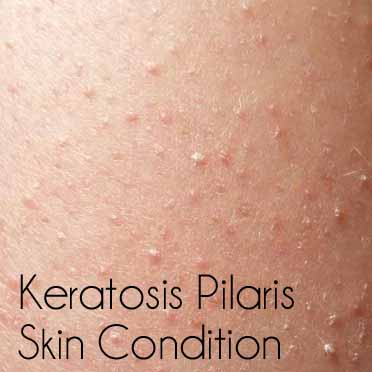
Keratosis pilaris happens when your body produces too much keratin, a protein that’s supposed to protect skin from infection and other harmful things. When keratin builds up, it forms a plug that blocks the opening of a hair follicle instead of shedding normally. That plug is the bump you’re seeing and feeling.
A few things make it more likely or more noticeable:
- Genetics. KP tends to run in families. Since two of my girls have it, I’m guessing they can thank me for that one.
- Dry skin. This is the big one. Dry skin makes the keratin buildup worse, which is why KP often flares in winter and calms down in summer when the air (and your skin) has more natural moisture.
- Age. It’s extremely common in kids and teens — some estimates suggest the majority of teenagers deal with it at some point — and it can improve with age, even if (as I mentioned) it doesn’t always disappear completely.
- Other skin conditions. People with eczema or generally dry, sensitive skin seem to get KP more often.
It really isn’t more than a cosmetic issue, and for most of us, it’s not worth losing sleep over. But I get it — Kaitlyn had hers on her forearms, which are far more visible than upper arms or thighs, and she reached an age where she started noticing and caring about it. Because it bothered her, I did some digging and talked to her pediatrician about what we could actually do about it.
Is It Eczema, Acne, or Something Else?
This is a question I get a lot, so let’s clear it up. I’ve had people tell me their child’s keratosis pilaris was eczema. It isn’t, and anyone who has dealt with real eczema can usually tell the two apart pretty quickly once they know what to look for.
- Eczema tends to be inflamed, intensely itchy, and can ooze or crust during flare-ups. It often shows up in the creases of elbows and knees.
- Keratosis pilaris is rough and bumpy but generally not itchy or inflamed, and it shows up on the outer arms, thighs, and cheeks rather than in the creases.
- Acne involves clogged pores too, but acne bumps are typically inflamed, can become pustular, and show up on the face, chest, and back rather than the arms and thighs.
If you’re ever unsure, that’s a great reason to loop in your pediatrician or a dermatologist — which is exactly what I did with Kaitlyn.
>>>Read: Surviving Eczema with Kids
How Do You Treat Keratosis Pilaris?
Let’s get the most important expectation out of the way: you can’t cure keratosis pilaris. But you absolutely can improve it, and the difference between an untreated flare and a well-managed one is significant.
There are prescription creams a dermatologist can give you for more stubborn cases. We’ve opted to manage it with consistent, over-the-counter care, and it’s worked well for us. (This post may contain affiliate links, which won’t change your price but will share some commission. This does not increase your cost.)
Step 1: Fight the Dry Skin
Since dry skin is one of the biggest drivers of KP, the first and most important step is keeping skin as hydrated as possible. Our pediatrician agreed with this approach. A few ways to do that:
- Essential oils. Lavender is a good one for keeping skin calm and moisturized.
- Lotion. What counts as a “good” lotion really does vary from skin to skin. I personally love Jergens Ultra Healing. My kids have also used Vanicream with great results. If you want something specifically formulated for rough, bumpy skin, look for lotions with lactic acid, urea, or alpha hydroxy acids (AHAs) — these ingredients are the ones dermatologists reach for most often because they help soften the keratin buildup, not just sit on top of it.
- A humidifier. This helps keep moisture in the air, which is especially helpful if you live in a dry climate. We have to run one in the winter here for our skin.
Step 2: Exfoliate Consistently
An essential step I’ve found is some form of regular exfoliation. I like to use a pouf bath sponge along with Dove body wash (again, the exact brand will vary depending on your skin type — I love Dove for my dry skin). You wash well with those two things, then lotion up generously right afterward while skin is still a little damp.
I’d used this method years ago and then let it slide — let’s be honest, a loofah just takes longer to rinse out than you want to spend in the shower as a mom of four. But when I revisited it, I saw quickly that it still worked well.
Santa actually brought a loofah and some Dove body wash to each of my girls one Christmas. Since then, they’ve used this routine consistently, and their keratosis pilaris has noticeably improved.
A Few Other Things to Try
Based on both our own experience and what other parents and readers have shared over the years, here are a few additional things worth knowing:
- Don’t over-scrub. It’s tempting to scrub harder when you see bumps, but aggressive scrubbing can irritate skin and make things look worse, not better. Gentle, consistent exfoliation beats occasional harsh scrubbing every time.
- Urea creams (like those containing 10% urea) are another dermatologist-favored option for softening rough patches, in addition to lactic acid options.
- Be patient. Most people see real improvement within a few weeks to a couple of months of consistent care — not overnight.
When to See a Doctor
Keratosis pilaris is something you’ll typically manage rather than cure, and most cases don’t need medical treatment at all. That said, it’s worth checking in with your pediatrician or a dermatologist if:
- The bumps are very itchy, inflamed, or seem to be getting worse despite consistent home care
- You’re not sure whether it’s KP, eczema, or something else
- Your child is self-conscious about it and wants to explore prescription-strength options
- The skin becomes painful, infected-looking, or starts oozing (this would point to something other than typical KP)
Always consult with your doctor on medical conditions. This post is not a substitute for professional medical advice.
Frequently Asked Questions
Does keratosis pilaris go away on its own? For some people, yes — it can fade with age or become less noticeable, especially by adulthood. For others (myself included), it sticks around longer than expected. It also tends to be less noticeable in summer and flare up more in winter when skin is drier.
Is keratosis pilaris contagious? No. It’s not caused by an infection, and you can’t catch it from or pass it to someone else. It’s related to genetics and skin type, not germs.
What age does keratosis pilaris start? It commonly shows up in childhood or the teen years and is extremely common among adolescents. It can also persist into or even first appear in adulthood.
Can diet affect keratosis pilaris? Some readers have shared that dietary changes — like cutting out certain allergens — coincided with improvement in their own or their child’s KP. This isn’t something I can speak to from personal experience, but if you suspect a food sensitivity might be playing a role, it’s worth discussing with your pediatrician or an allergist.
Conclusion
Keratosis pilaris is something you largely have to accept and manage rather than eliminate, but a few simple, consistent habits can make a real difference in how it looks and feels. Focus on fighting dry skin and exfoliating gently but regularly, and give it some time. Give it a try, and I think you’ll see improvement.
Do you have any tricks that have helped with keratosis pilaris in your house? I’d love to hear what’s worked for you in the comments.
Related Posts
- Winter Skin Tips for Babies and Kids
- How To Help Kids with Growing Pains
- Cradle Cap: What Every Parent Should Know
- Surviving Eczema with Kids
This post first appeared on this blog in January 2016