
Your newborn’s body can look pretty alarming in the first week — and almost all of it is completely normal. Jaundice, cord stumps, mystery poop colors: here’s what’s fine, what’s not, and when to call the doctor.
You’ve waited nine months to meet this person. And now that they’re here, you find yourself staring at their belly button wondering if it’s supposed to look like that, or Googling “newborn poop green should I call doctor” at 3 a.m.
Welcome to the first week of parenthood.
The truth is, newborn bodies are genuinely strange — in ways that are completely normal but nobody warned you about. This guide covers the most common physical realities that send new parents into a spiral of worry, so you can tell the difference between “this is just what babies do” and “time to call the pediatrician.”
Every baby is different, and only your pediatrician or qualified healthcare provider can evaluate your child’s individual health. If you have concerns about your newborn’s health, always contact your doctor or seek medical attention promptly.
Jaundice: That Yellow Tinge You Weren’t Expecting
Jaundice — the yellow coloring of a baby’s skin and whites of the eyes — affects somewhere between 60 and 80 percent of newborns in the first week of life. If your baby looks a little like a tiny sunflower, you’re very much not alone.
It happens because newborns have more red blood cells than they need, and as those cells break down, they release a yellow pigment called bilirubin. Their immature livers can’t process it fast enough, so it builds up in the skin. Physiological jaundice (the garden-variety kind) typically appears on day two or three, peaks around day four or five, and clears up on its own by two weeks for full-term babies.
When to worry: Call your doctor if jaundice appears within the first 24 hours of life (that’s a red flag), if the yellowing is spreading to your baby’s belly, arms, or legs, if your baby is very difficult to wake, feeding poorly, or seems limp. Severe jaundice — where bilirubin gets very high — requires treatment with phototherapy (a special blue light), and in rare cases, more intervention. Your pediatrician will check bilirubin levels before you leave the hospital and again at your first follow-up visit.
The best thing you can do at home: feed, feed, feed. Frequent feeding helps babies pass bilirubin through their stool. This is not the moment to let a sleepy baby skip meals.
>>>Read more about Jaundice from the May Clinic here
The Umbilical Cord Stump: Patience Over Everything
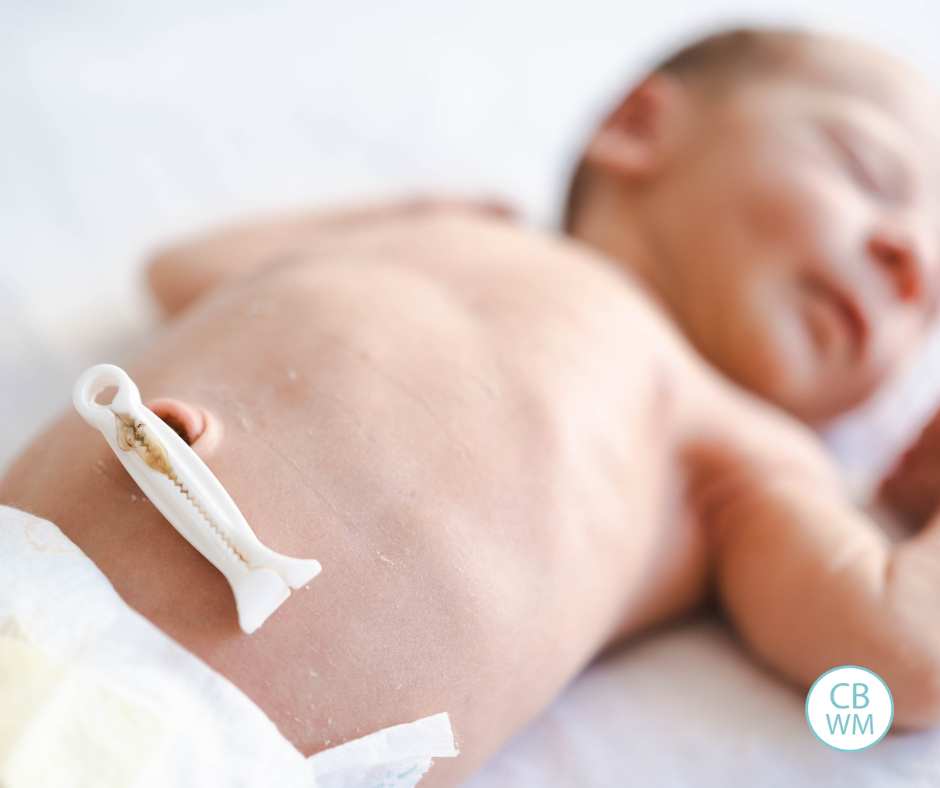
That little shriveled stump attached to your baby’s belly button is essentially a piece of tissue drying out and dying — which sounds alarming but is exactly what’s supposed to happen. It will go from yellowish-green to brown to black over the course of one to three weeks, and then it will fall off on its own.
The main rules of cord care are almost insultingly simple: keep it clean, keep it dry, and leave it alone. Fold the front of the diaper down so it doesn’t rub against the stump. Give sponge baths instead of tub baths until it falls off. Don’t try to pull it off, even when it looks like it’s barely hanging on.
When to worry: A little dried blood where the cord meets the skin is normal, especially right before it falls off. What’s not normal is redness, warmth, or swelling spreading onto the skin of the belly, a foul smell, or yellow discharge that isn’t just dried fluid. These can be signs of omphalitis, an infection that needs prompt treatment. A small amount of clear or slightly yellowish fluid right at the base as it detaches? Usually fine. Bright yellow pus, spreading redness, or a baby who seems unwell? Call the doctor.
Helpful Book: I loved the book What to Expect the First Year to help me navigate all of the concerns that come up during baby’s first year (affliate link)
Circumcision Care: The First Week of Healing
If your son was circumcised, the healing process looks a little alarming but follows a predictable pattern. The tip of the penis will be red and may have a small amount of yellow discharge in the first few days — this is normal healing tissue, not infection.
The standard care routine is to apply a small amount of petroleum jelly to the tip of the penis (or to the front of the diaper so it doesn’t stick) at every diaper change for the first week. Keep the area clean and gently rinse with warm water. The redness and swelling should improve steadily over the first week to ten days.
When to worry: Increasing redness instead of decreasing redness, significant swelling that doesn’t go down, bleeding that doesn’t stop with gentle pressure, foul-smelling discharge, or a baby who hasn’t urinated within eight hours of the procedure — these all warrant a call to the pediatrician. Also call if you notice a yellowish film that seems to be spreading, rather than the small patch of normal healing tissue at the site itself.
Newborn Skin: A Whole Gallery of Weird
Newborn skin has been submerged in fluid for nine months. It has a lot of adjusting to do. Here are the most common skin surprises:
Baby acne usually appears between two and four weeks of age — small red or white pimples on the cheeks, nose, and forehead. It’s thought to be related to maternal hormones still circulating in the baby’s system. It looks worse than it is, it doesn’t bother the baby at all, and it goes away on its own within a few weeks. Don’t squeeze, scrub, or apply acne products. Just gentle cleansing with water.
Milia are tiny white or yellowish bumps, usually on the nose and cheeks, that look like miniature whiteheads. They’re actually small cysts from blocked skin glands and are present in about half of all newborns. Like baby acne, they resolve on their own within a few weeks and require no treatment.
Peeling skin is almost universal in the first week or two. The vernix (that waxy white coating) that protected your baby’s skin in the womb is gone now, and the top layer of skin often peels off in flakes or sheets. This looks dramatic but is completely normal. You can apply a gentle, fragrance-free baby moisturizer if you like, but the peeling will resolve on its own regardless.
Cradle cap (seborrheic dermatitis) typically shows up between two and six weeks as yellowish, scaly, crusty patches on the scalp. It can also appear on the eyebrows, behind the ears, and in skin creases. It’s not a sign of poor hygiene or any health problem — it’s a very common inflammatory skin condition related to overactive oil glands. To treat it, apply a little mineral oil or baby oil to the scalp before bath time, let it sit for a few minutes to loosen the scales, then gently comb through with a soft brush before washing with a gentle baby shampoo. It usually clears within a few months, though it can come and go.
>>>Read: Cradle Cap: What Every Parent Should Know
Poop: The Color Chart Nobody Gives You at the Hospital
Newborn stool is one of the more genuinely shocking aspects of early parenthood, and the range of “normal” is wider than most people expect.
In the first day or two, your baby will pass meconium — thick, sticky, dark greenish-black tar. This is made of amniotic fluid, mucus, and other materials your baby swallowed in the womb. It has the consistency of motor oil and the color to match. This is completely normal and actually a good sign, because it means the digestive system is working.
After meconium clears (usually by day three or four), stool transitions to a lighter, brownish-green color, and then settles into the normal newborn range:
Breastfed babies typically produce mustard-yellow, seedy, loose stools — sometimes with a mild, sweet smell. This is the gold standard. Frequency varies wildly: some breastfed babies poop after every feeding, others go several days between poops (especially after the first few weeks, once milk supply is established). Both can be normal. I have had the range with my babies.
Formula-fed babies tend to produce pale yellow to tan to brown stools that are firmer and have a stronger smell. They typically poop once or twice a day, though some variation is normal.
Green stools have many causes — a foremilk/hindmilk imbalance in breastfed babies, an iron-containing formula, introduction of solids (later on), or a mild illness. The occasional green poop is almost never a reason to panic.
When to worry about poop: White or pale gray stools can indicate a problem with liver function and warrant a same-day call to the doctor. Red stools that are actually blood (not just beets or red food dye) need prompt attention. Black stools after meconium has passed could indicate bleeding in the upper digestive tract. And in the first few days, watch for the absence of poop altogether — newborns should pass meconium within 24 to 48 hours of birth, and failure to do so can indicate a blockage.


Weight Loss and Regain: The First-Week Rollercoaster
This one surprises many new parents: it is completely normal for newborns to lose weight in the first few days of life. Most full-term babies lose between five and ten percent of their birth weight in the first three to five days. This happens because they’re passing meconium, losing excess fluid they were born with, and taking in relatively small amounts of colostrum while your milk supply is getting established.
Weight loss of up to ten percent is generally considered acceptable in a healthy, full-term newborn who is feeding well and otherwise doing fine. Weight loss greater than ten percent of birth weight, or a baby who continues to lose weight beyond day four or five, typically prompts closer monitoring and possible supplementation.
The good news is that most babies begin regaining weight by day four or five and should be back to their birth weight by ten to fourteen days. By two weeks, most healthy newborns are solidly on their way up.
What you can do: Feed baby regularly, at least eight to twelve times in a 24-hour period. Wake a sleepy newborn to feed if it’s been more than two to three hours since the last feeding started. In the first few days, adequate feeding is the single most important thing for healthy weight regain — which is one more reason why that early-jaundice advice (“feed more!”) is exactly right.
Your pediatrician will weigh your baby at the one- to two-day discharge visit (if born in a hospital) and again at your two- to five-day follow-up, precisely to keep a close eye on this trajectory. Don’t skip that appointment.
Conclusion
The first two weeks with a newborn involve a steep learning curve in a state of significant sleep deprivation, which is not a recipe for calm. If something worries you and you can’t find reassurance here or from your care team, call your pediatrician’s office. Most practices have an after-hours nurse line for exactly this reason, and “I’m not sure if this is normal” is one of the most valid reasons to call that exists.
You’re not being anxious for no reason. You’re paying attention. That’s already good parenting. Don’t let the concern of being judged for being too worried stop you from following your gut (even if it ends up being fine!).
Related Posts
- Winter Skin Tips for Babies and Kids
- Infant Constipation: Causes, Signs, and Treatments
- Thrush Infection When Breastfeeding
- Addressing Concerns About Baby’s Ears
- Concerns About Your Baby’s Nose
- Baby’s Eyes Concerns: When to Be Worried
- Baby Hair and Scalp Concerns
- Baby Head Concerns: Looking at head development
- Cradle Cap: What Every Parent Should Know

The information in this post is intended for general educational purposes only and does not constitute medical advice. Every baby is different, and only your pediatrician or qualified healthcare provider can evaluate your child’s individual health. If you have concerns about your newborn’s health, always contact your doctor or seek medical attention promptly. In an emergency, call 911.