
Bringing baby home to a toddler? New baby plus a toddler who is used to being an only child? It is a season of sweet moments AND hard ones–sometimes in the same afternoon! Get ideas for what helps with a new baby and toddler introduction, from the first meeting to the regression that might follow. Here is how to make the first meeting and the weeks after go smoothly.
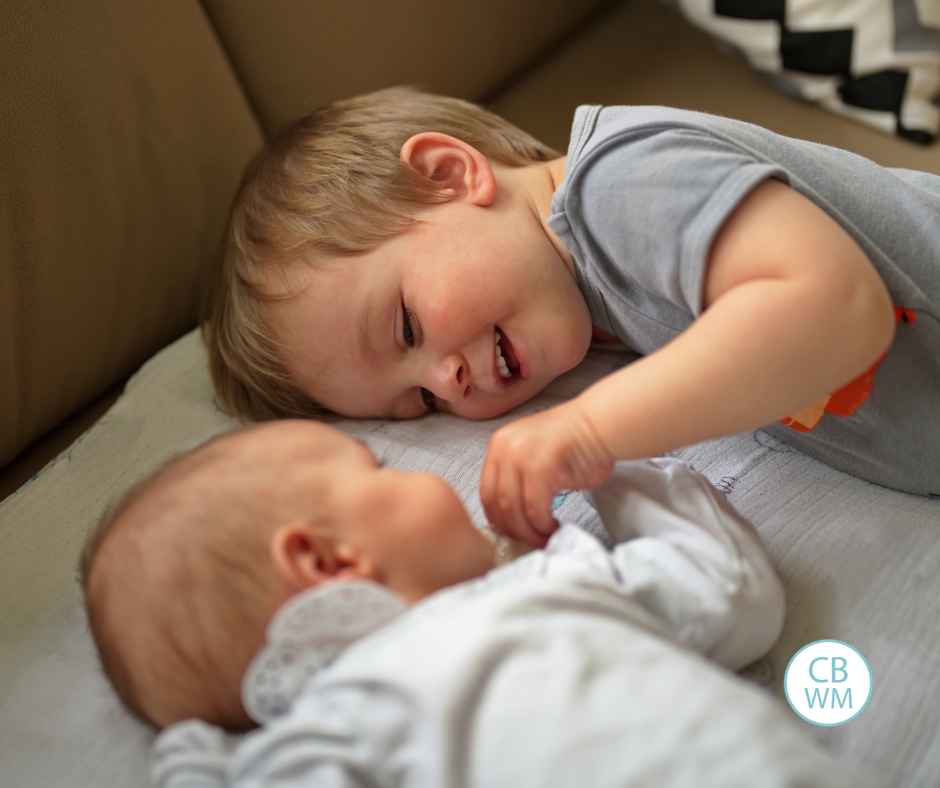
Bringing home a new baby can be very understandably confusing and disorienting for a toddler who is used to being an only child. It can even be hard for toddlers who have older siblings since they are used to being the youngest child! Some might just LOVE the baby, while others will be very put off by the baby.
Why This Transition Feels So Big
For their entire life, your toddler has been the baby of the family. They have had your lap, attention, and undivided love all to themselves. An now, seemingly out of nowhere, they are being asked to share all of it with a tiny stranger who cries a lot and takes up a surprising amount of space in your arms.
This is a big adjustment, for them and for you. I remember wondering how my toddler would react to each baby. They each had their own unique response. With a little intention, this can be one of the sweetest transitions in your family’s story rather than one of the hardest–even for the toddler who isn’t too keen on a new baby at first.
Before Baby Arrives: Lay the Groundwork
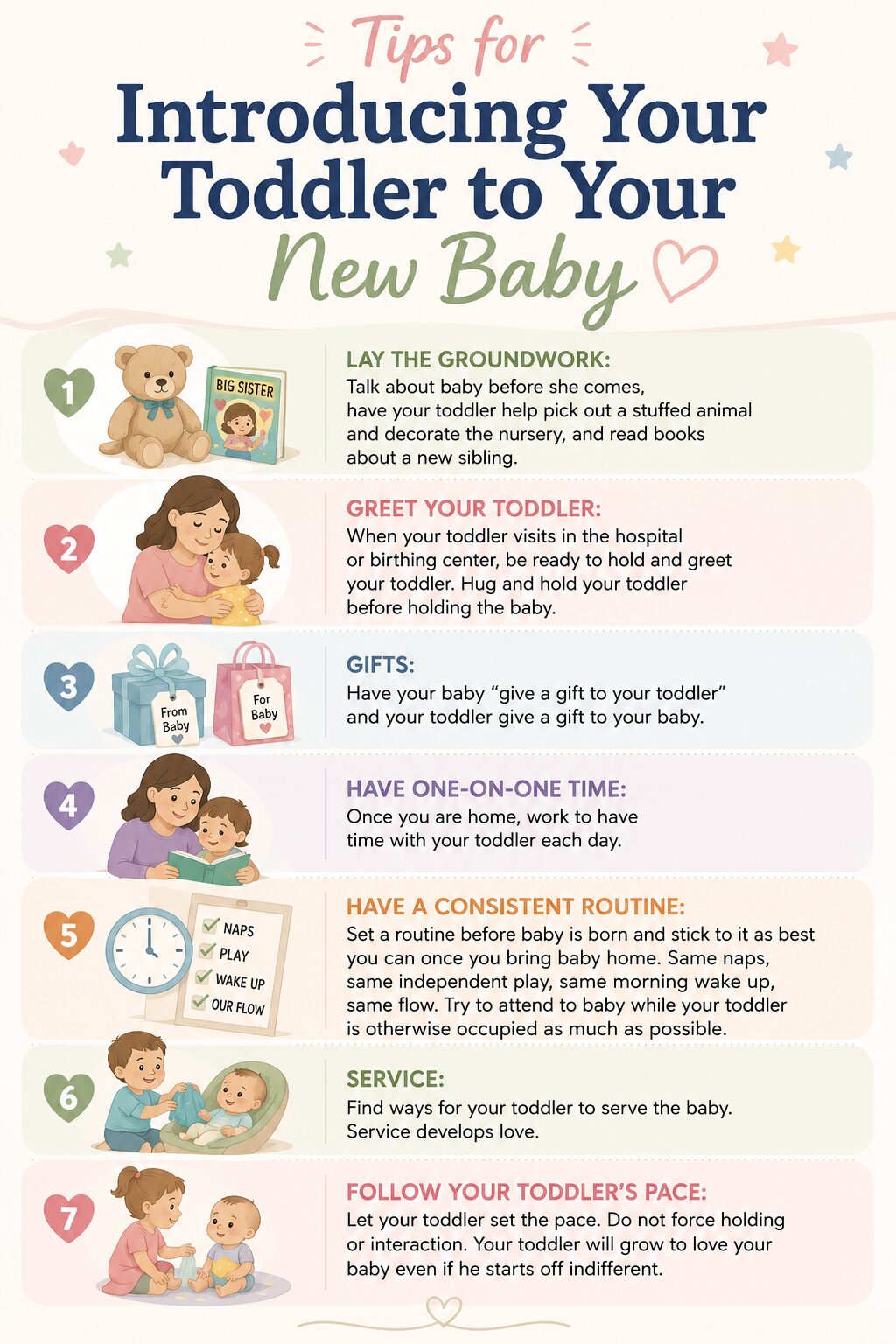
The introduction to your new baby doesn’t actually start in the hospital room. It starts in the weeks and months before baby comes home. Talking about the baby in simple, positive terms, reading about becoming a big brother or sister, and involving your toddler in small preparations (like picking out a stuffed animal for the baby and helping to set up the nursery) all help make the idea of a new sibling feel real and exciting rather than abstract and scary.
I have found it helps to keep the timeline realistic for your toddler’s understanding. A two-year-old doesn’t have a first grasp on “in three months”, so save the more detailed conversations for the final few weeks when the baby’s arrival is imminent, and the concept won’t feel so far away or confusing.
It is also worth thinking about logistics now: who will care for your toddler while you are at the hospital or birth center? What will the routine look like in that stretch? Will anyone stay with you in the days or weeks after the baby comes? Toddlers do best wtih familiar faces and familiar routines, so if possible, have the same trusted person (grandma, dad, close friend, babysitter…) cover that gap rather than passing them between several new caregivers.
Despite your best plans, be prepared for your toddler to still be thrown off. You can’t really imagine exactly how life with change, so of course a toddler cannot. I think about what I thought having my first baby would be like versus what it was actually like. WAY different. So you can prepare your toddler, but they will still need adjustment.
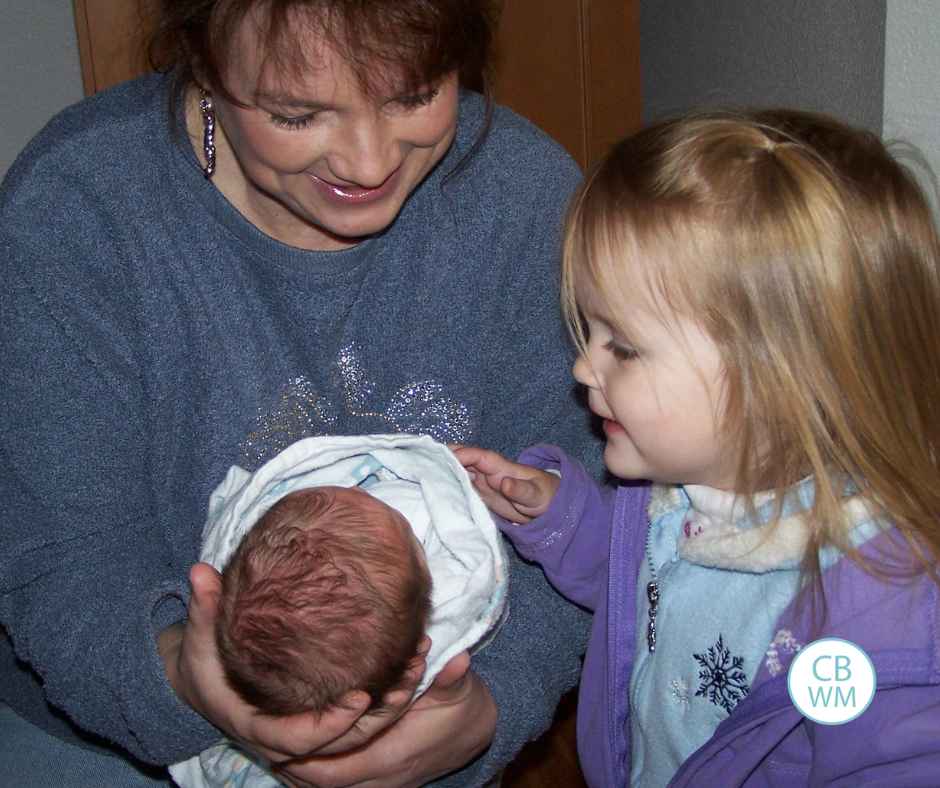
Above is a photo of Kaitlyn meeting McKenna for the first time at the hospital She was so excited to have a little sister.
The First Meeting
When it is time for your toddler to meet the new baby, a few small choices can make a big difference in how it goes.
First, consider having your arms free when your toddler walks in. If your toddler comes in and immediately sees you holding the new baby, it can feel like the baby has replaced them. Instead, try having someone else hold the baby or have baby in the bassinet nearby so your arms can be free to hug your toddler. If your toddler is meeting the baby in the birth center or hospital, your toddler will already have some anxiety being in a strange location and might be confused seeing you in a strange bed. So be ready to hug your toddler.
Second, have a gift from the baby ready. This might feel small and feel like a gimmick, but in my experience, it goes a long way toward starting things off with a positive association. A little something that says, “the baby is excited to be your sibling,” reframes the baby as a gift-giver and friend rather than a competitor. You can also have your toddler pick out a gift for the baby ahead of the birth to bring to the first meeting.
Third, let your toddler set the pace. Some toddlers want to hold the baby immediately. Others want nothing to do with the little person for the first few visits. Both reactions are completely normal, and pushing a hesitant toddler to engage before they are ready can backfire. Offer, but don’t insist. I have had kids have a whole range of reactions to the new baby in the hospital, from mild interest to complete adoration.
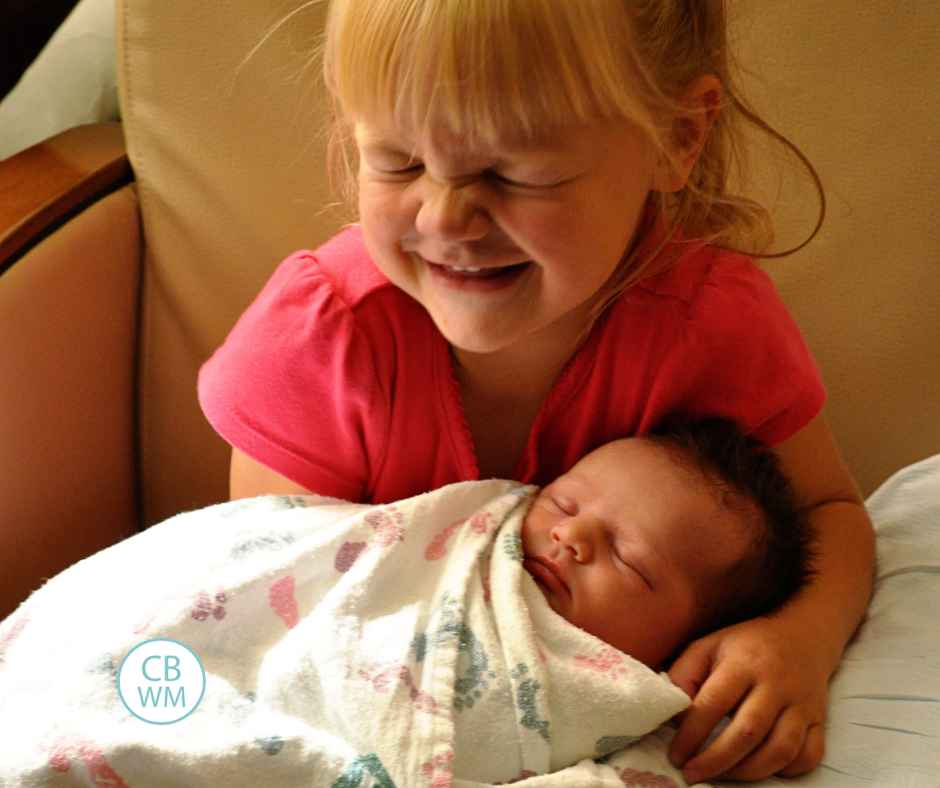
I don’t think McKenna could have been more excited to welcome Brinley to our family. You can see how excited she was in this photo of her meeting Brinley for the first time at the hospital:
The First Few Weeks Home
Bringing your baby home is when the real adjustment begins. Now the new baby isn’t just someone we saw at the hospital. The baby is a permanent member of the household and is changing life. Your toddler will start to notice the day-to-day reality of that.
This is the period where I always recommend carving out dedicated one-on-one time with your toddler, even if it is just 15 or 20 minutes a day. It does not need to be elaborate. Reading books together, building a tower out of blocks, playing with Play-Doh, or coloring together sends the message that they still matter and you still have time for them.
It also helps to give your toddler a role. Toddlers love to feel helpful and important. Have them get a diaper, sing to the baby during a diaper change or before a nap, or read a story. You do want to be sure you don’t create a scenario where it seems like your toddler is in charge of the baby. They need to maintain a sibling role. But they can do things that provide service to the baby. Service develops love, so as your toddler serves their sibling, they will grow to love them.
Common Reactions (and What They Mean)
Every toddler responds differently to a new sibling, and it is worth knowing ahead of time that almost any reaction is in the range of normal.
Some toddlers are instantly affectionate and in love with the baby. They shower the baby with kisses and want to help with everything. They want to hold the baby at all times. Others go the opposite direction and become clingy, whiny, or even indifferent toward the baby entirely. Still, others act out in ways that seem unrelatable to the baby at all. More tantrums, more testing of limits, more difficulty with transitions they used to handle just fine.
None of these reactions mean you are doing anything wrong. They are just the way your toddler is processing this major life change right now. Toddlers can’t communicate very well and can’t just sit down and express their feelings.
When my second child was born, my oldest was 22 months old. He seemed willing to accept that she was around, but he wasn’t thrilled about her. He was fine with me attending to her. He seemed to realize that was necessary for her sake. But when my husband would hold her, my son would tell my husband to give her back to me. I don’t know if he felt like I should be the only one to hold her or if he felt jealous of my husband holding her.
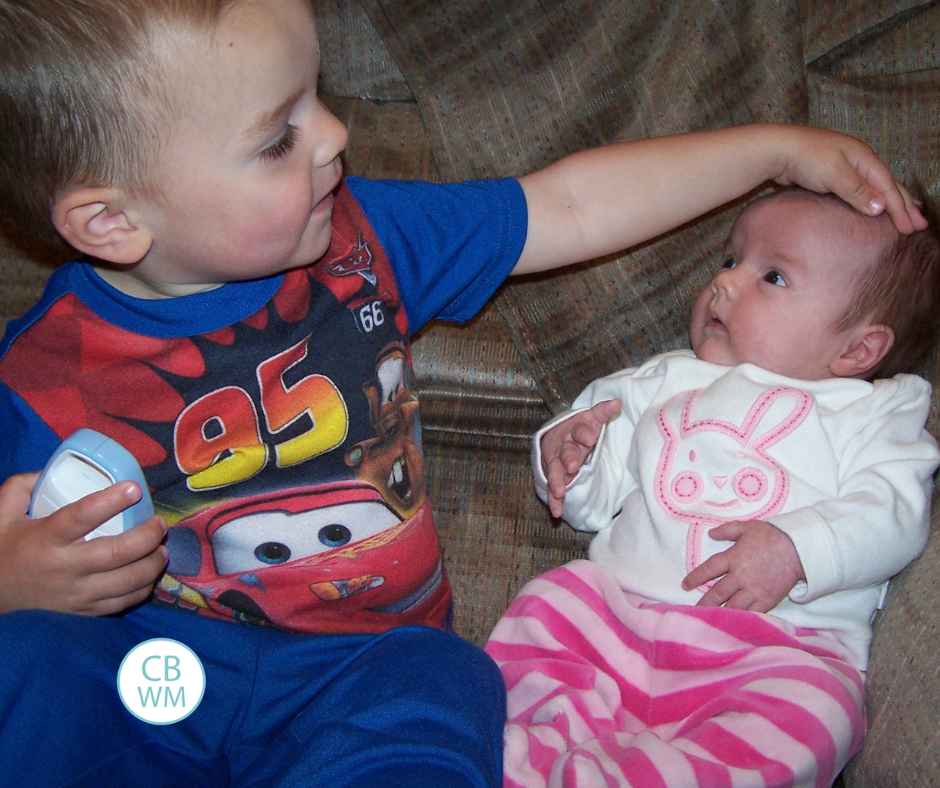
I focused on him serving her, and I also pointed out all the ways they were the same. He quickly grew to love her, and when she got old enough to play with him, he was very ready. Here is a picture of Brayden with Kaitlyn in her first few weeks of life. He quickly grew to love her.
Keeping Your Toddler’s Schedule Steady
If there is one thing I always come back to during this transition, it si the power of a predictable schedule. A new baby in the house often means naps happen at different times, mealtimes shift, and the household rhythm feels different even to the adults. Imagine how unsettling that feels to a toddler who thrives on routine.
Where you can, protect your toddler’s usual nap times, mealtimes, and bedtime routine. Try to build your baby’s schedule around your toddler’s schedule. I talk more about this in this post:
>>>Read: Prepping Siblings for Baby Tip: Establish Consistency
Consistency doesn’t erase the disruption of a new sibling, but it does give your toddler a stable foundation to stand on while everything else in their world is shifting. A toddler who is well-rested and on a predictable rhythm has far more emotional capacity to handle change gracefully than one who is overly tired and running on empty.
This is also a great window to lean on independent playtime if you have already established it. Those blocks where your toddler is used to playing contentedly on their own buy you the hands-free minutes you will need to nurse, soothe, and take care of baby. Or it might allow you to catch your breath without your toddler feeling shuffled aside. Make independent play a part of their day before baby comes. If you try to start it when baby arrives, it can feel isolating rather than comforting.
Helping Them Bond
Bonding between siblings doesn’t usually happen in one big moment. It builds slowly through dozens of small, ordinary interactions.
Narrate the relationship for your toddler in simple terms. “The baby loves hearing your voice!” “Look how the baby calms down when you are near!” “You are such a good big sister!” These little narrations help plant the idea that the baby loves them. This can be helpful, especially because babies do not smile for several weeks.
Do not blame your inability to do something on the baby. “I was up with the baby in the night, so I am too tired to go to the park today.” No. You do not want the baby to be a threat. “Mommy is really tired today, so we are going to do XYZ today instead of go to the park.” Keep the baby out of the blame circle.
Photos and keepsakes can also help with bonding. Some families like to print a photo of the toddler and baby together and hang it somewhere where the toddler will see it often. This gives the sibling relationship a visible, celebrated place in the home from the beginning.
And give it time. Newborns are not interactive. They do not smile, coo, or laugh. It might take until these things happen for your toddler to warm up. Don’t be discouraged if the early weeks feel more like tolerance than adoration. It grows over time.
When Regression Happens
It is extremely common for toddlers to regress a bit after a new baby arrives. They might ask for a pacifier they had previously given up. Potty accidents might happen. They might want to be carried more or get out of bed constantly. This regression is almost always temporary and is rooted in a very understandable place: your toddler is watching baby get all of this attention and wonders if acting more baby-like will get them some attention back.
This is where a solid routine helps. Have one-on-one time with your toddler in your day and keep your daily flow as similar to pre-baby as possible.
The most effective response to regressions isn’t to shame or push back against the regression, but to meet the underlying need. Offer extra cuddles, extra patience, and extra reassurance that your love for them hasn’t changed one bit. In most cases, as your toddler settles into the new normal and starts to trust that their place in the family is secure, the regressive behaviors fade on their own.
Conclusion
Introducing your baby to your toddler is rarely a tidy moment – it is a season. There will be sweet moments of connection, and there will be hard moments of adjustment, sometimes all in the same afternoon. Give yourself grace and your toddler patience. Trust that with time, consistency, and reassurance, your children will build a foundation of a relationship that will last the rest of their lives.
if you are in the thick of this transition right now, know that what you are feeling — the exhaustion, the guilt, the hope that they will love each other — is something so many other mamas have felt, too. You will get there!
Related Posts
- Tips to Successfully Add Your Baby to the Family
- How to Teach a Child to Be Gentle With a Baby
- One to Two Children Transition: How to have success
- Overcoming the Challenges of Adding Baby to the Family
- Planning Your Schedule for Multiple Children
- Sample Schedules: Tandem Schedules for 2 Kids
- How to Balance Multiple Schedules
- Preparing Your Children for a New Baby
- How to Prep Siblings For a New Baby