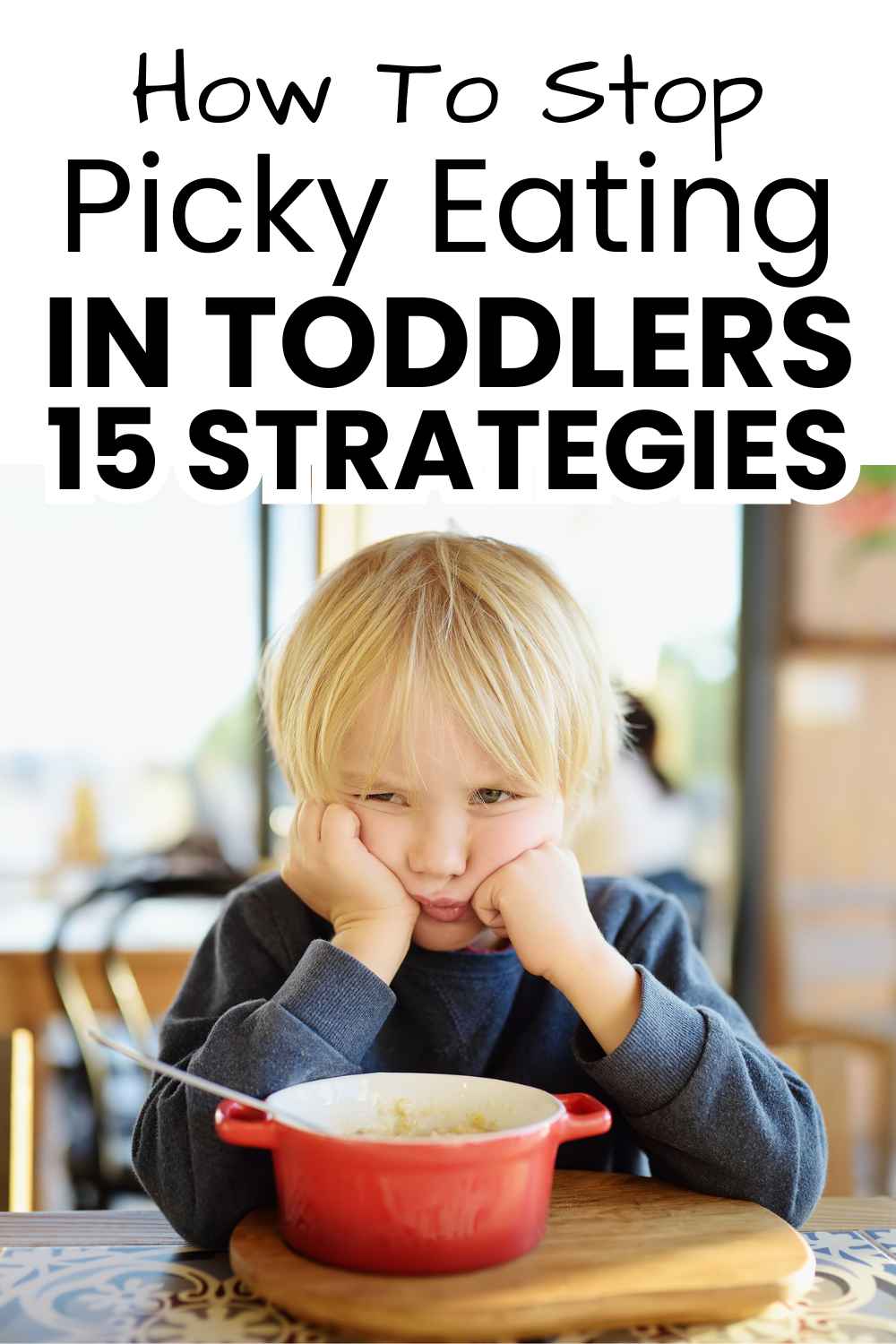
Picky eating is normal in the toddler years — but that doesn’t make mealtimes any less exhausting. Learn why it happens and get 15 practical strategies to make the table a calmer, less stressful place for everyone.

Your toddler ate almost everything you put in front of them at 10 months old. Then somewhere around their first birthday — or maybe their second — a switch flipped. The same child who happily ate scrambled eggs, sweet potatoes, and peas now pushes the plate away, bursts into tears over foods touching, or survives entirely on crackers and shredded cheese.
Sound familiar?
First: you are not alone. Picky eating is one of the most common concerns parents have during the toddler years — and also one of the most stressful, because food feels so tied to health and to love. When your child refuses what you made them, it can feel personal. It isn’t.
Understanding why toddlers become picky — and having a consistent, calm strategy — makes a big difference. Let’s dig in.
Why Toddlers Become Picky Eaters
Before we talk strategy, it helps to understand what’s actually happening developmentally. Toddler picky eating is not a parenting failure. It is almost entirely normal and has real biological and developmental roots.
Growth slows down dramatically. In the first year of life, babies triple their birth weight. Growth in the toddler years slows way down, which means toddlers genuinely need fewer calories than you’d expect. Their appetite reflects this. The child who used to eat constantly may seem to eat almost nothing — and physiologically, that may be okay.
Neophobia kicks in. Between ages 18 months and 3 years, most toddlers develop a natural wariness of new foods. This is actually thought to be an evolutionary holdover — when toddlers became mobile enough to wander and eat things independently, a preference for familiar, safe foods protected them. It is completely normal, and it does pass, though it requires patience.
Toddlers are discovering autonomy. This is the age of “I do it myself!” and “No!” — the toddler is figuring out that they are a separate person with preferences and power. Food is one of the few arenas where they can exert genuine control. Fighting them on it head-on rarely works well.
>>>Read: Child Won’t Eat Favorite Foods
Sensory sensitivities are real. Many toddlers are genuinely sensitive to textures, temperatures, colors, and smells in a way that adults have forgotten. A food being “slimy” or “mushy” isn’t drama — it’s a real sensory experience for them.
Knowing this doesn’t make mealtimes less exhausting. But it does mean that the right approach is one that works with these developmental realities rather than against them.
The Division of Responsibility: The Framework That Changes Everything
The most useful concept in toddler feeding comes from dietitian Ellyn Satter, and it is called the Division of Responsibility. In a nutshell, it works like this:
You decide: what food is served, when it’s served, and where eating happens.
Your toddler decides: whether to eat and how much.
This sounds simple, but it’s genuinely hard to put into practice — especially when your child has eaten nothing but three bites of banana all day. The temptation to coax, bribe, or pressure is enormous. But pressure almost always backfires. It increases anxiety around food, reduces a child’s internal hunger awareness, and can actually create more restrictive eating, not less.
Your job is to provide reliable, structured, nourishing meals. Their job is to decide what to do with what’s on the plate. This framework reduces power struggles dramatically because it takes food off the battlefield.
What you do not want to do is start feeding your toddler all day long out of fear that they are hungry. Allow them to decide to eat or not at meal or snack time and do not add in extra snacks or meals. Your toddler will not starve themself.
>>>Read: What To Do When Your Child Doesn’t Like A Certain Food
Structure Matters: Set Up Mealtimes for Success
If you follow the Babywise approach, you already appreciate the power of a predictable routine. The same principle applies to eating. Structure is one of the most effective tools for picky eaters.
Set consistent meal and snack times. Toddlers who graze all day — a cracker here, a cup of milk there, a few bites at the table — are rarely hungry at mealtimes. They are never hungry hungry. When you set predictable meal and snack times with a few hours between each, your toddler comes to the table with an actual appetite. Hunger is your ally.
>>>Read: Appetite vs. Hunger When it Comes to Kids
Limit milk and juice between meals. This is one of the most common ways toddlers fill up before meals without parents realizing it. Milk is filling and nutritious, but too much of it throughout the day can suppress appetite at the table. Save milk for with meals or after them, not as a between-meal drink. If they are thirsty between meals, let them drink water.
Sit together. Whenever possible, eat with your toddler. Children learn by watching. When they see you eat a variety of foods with enjoyment — and without drama — that is modeling that genuinely works over time. This is a long game, but it works.
Turn off screens during meals. This one matters more than most people realize. When a toddler is distracted by a show, they are not connected to their hunger and fullness cues. They are also not engaged in the social experience of eating, which is part of how they learn to enjoy food. A distracted toddler is also harder to read — you may miss signs that they’re done, or miss that they’ve eaten more than you thought.
Keep meals calm and low-pressure. The mood at the table is contagious. If mealtimes feel tense and anxious — if a parent is watching every bite, narrating what the child is eating, or reacting with visible stress to refusals — toddlers pick up on that anxiety and it makes the situation worse. Your goal is a relaxed table, even when it’s hard.
15 Practical Strategies for Picky Toddlers
Here are the strategies that consistently make a real difference. You don’t have to use all of them — pick the ones that fit your family and be consistent.
1. Always include one safe food on the plate.
At every meal, serve at least one food you know your toddler will eat — a food that is reliably accepted. This is not the same as making a separate meal. It just means that within the meal you prepared, there is something they can eat without stress. It reduces the all-or-nothing dynamic and ensures they leave the table having eaten something. I had one child who was a very picky eater as a toddler. I always made sure she had a favorite food at each meal. That way I would not stress that she was hungry.
2. Serve new foods alongside familiar ones.
Never put a new food on the plate by itself and expect acceptance. Pair it with things your toddler already likes. The new food doesn’t have to be eaten — it just has to be there repeatedly. Research consistently shows it can take 10 to 20 exposures before a child accepts a new food. Most parents give up after two or three. Keep going.
3. Don’t make a big deal of refusals.
This is the hardest one. When your toddler refuses a food — especially a food you worked to make, or a food you’re worried about nutritionally — the instinct is to react. But big reactions (positive or negative) teach toddlers that food refusal gets attention. A neutral response (“okay, you don’t have to eat that”) and moving on is the most effective response in the long run.
4. Avoid the short-order cook trap.
It is very tempting, when your toddler refuses what was served, to get up and make them something different. This feels kind in the moment, but it teaches toddlers that if they refuse long enough, something better will come. Stick with what was served. If they don’t eat, they can try again at the next meal. A healthy toddler will not be harmed by skipping a meal occasionally.
5. Involve toddlers in food choices — within your structure.
Giving a toddler some agency helps without handing over all control. Ask: “Do you want the apple sliced or in chunks?” or “Should we have broccoli or peas with dinner tonight?” They choose from your pre-approved options. This meets their need for autonomy without creating chaos.
6. Let them help in the kitchen.
Toddlers who help wash vegetables, stir batter, or tear lettuce are more interested in what ends up on the plate. It’s not a magic solution — a child who helped make the soup will still sometimes refuse it — but it increases engagement with food in a positive way. Start with simple, safe tasks: rinsing fruit, stirring, pouring premeasured ingredients.
7. Don’t negotiate, bribe, or reward with food.
“Eat three more bites and you can have dessert” feels logical, but creates real problems. It elevates dessert as the “good” food and further devalues the main dish. It also turns mealtime into a negotiation, which you will lose. If you serve dessert, serve it without strings attached — or serve it alongside the meal, as some feeding therapists recommend, to remove the power dynamic entirely. If you do not want to serve dessert if dinner foods were not eaten, do not make dessert part of the plan. Just break it out if dinner was eaten.
8. Manage portions.
A plate piled high with food can be overwhelming for a small child. Small portions are less intimidating. A tablespoon-sized serving of something new is much easier to look at than a full serving. They can always have more.
9. Play with food presentation — sometimes.
Cutting food into interesting shapes, arranging it in a fun way, or serving things in a small dish or muffin tin can work for some toddlers. Don’t make yourself crazy doing this every meal, but it can be a useful occasional tool for introducing something new.
10. Be patient with textures.
Many toddlers who seem to dislike certain foods are actually responding to texture more than flavor. A child who refuses cooked carrots might accept raw ones. A child who hates pureed mango might love frozen mango chunks. Experiment with preparation methods before concluding a food is a true rejection.
11. Don’t disguise foods as a long-term strategy.
Hiding spinach in smoothies or cauliflower in mac and cheese can be a useful nutritional bridge in the short term, but it doesn’t help a toddler learn to actually accept those foods. The goal is for them to eat a variety of foods comfortably, and that only happens through repeated, calm exposure — not concealment.
12. Avoid making comments about what or how much is being eaten.
Comments like “You barely ate anything!” or “You’re such a good eater today!” both put food at the center of attention and link eating to parental approval. Try to keep mealtime conversation about anything other than what’s on the plate.
13. Respect “I’m done.”
When your toddler signals they’re finished — whether by pushing the plate away, saying “all done,” or starting to play with food rather than eat it — take them seriously. Requiring them to sit at the table after they’re done doesn’t increase how much they eat; it just increases the unpleasantness of meals. Trust their hunger and fullness cues.
14. Keep offering foods that were rejected.
It can feel pointless to serve broccoli again when it was rejected four times already. Serve it anyway. Children need many low-pressure exposures before they’re ready to try something new. The goal isn’t for them to eat it every time it appears — it’s for it to become familiar and eventually safe.
15. Adjust your definition of “success.”
A meal where your toddler ate their safe food, touched a new food, sat at the table for a reasonable time, and the whole experience was calm? That is a success. It doesn’t have to mean a clean plate or a balanced meal every single time. Progress in toddler eating is slow, and it’s measured over months — not individual meals.
When to Talk to Your Pediatrician
Most toddler picky eating is developmentally normal and resolves over time with consistent, patient strategies. But there are situations where professional input is warranted. Talk to your pediatrician or ask for a feeding therapy referral if:
- Your toddler’s diet is so restricted (fewer than 20 foods, for example) that you worry about nutritional deficiencies
- They are losing weight or falling off their growth curve
- Mealtimes involve gagging, choking, or significant distress consistently
- They will only accept food from a very narrow set of textures or brands
- Feeding is causing extreme family stress or anxiety
A feeding therapist (often a speech-language pathologist or occupational therapist with feeding specialization) can be incredibly helpful when picky eating goes beyond typical toddler behavior.
A Word of Encouragement
I know how hard it is to serve a meal you worked on and watch it be pushed away. I know the mental load of trying to figure out how to get enough vegetables into a child who is currently living on plain pasta. I know the worry.
But here is what I want you to hold onto: most picky toddlers become much more adventurous eaters by the time they start school. The children who were rigid about food at age two often surprise their parents completely by age five or six. My pickiest eater as a toddler through preteen years is now my most adventurous eater. It is a long game, but they do change! The strategies above — especially keeping mealtimes calm, keeping structure, and continuing to offer a variety of foods without pressure — are genuinely effective over time.
Your job is to keep showing up at the table with good food and a relaxed attitude. Their job is to figure out what to do with it. Trust the process.
Related Posts
- 2 Important Tips for Overcoming the Picky Eater
- Appetite vs. Hunger When it Comes to Kids
- Are Picky Eaters Born or Made?
- Building the Foundation for a Lifetime of Healthy Eating
- Child Won’t Eat Favorite Foods
- Feeding the Littles: Tips for Nurturing Good Eaters
- How to Help Your Child Be a Good Eater
- What To Do When Your Child Doesn’t Like A Certain Food
- You Don’t Have to Like It, But You Do Have to Eat It