Ear infections are one of the most common reasons toddlers and babies suddenly stop sleeping well. Here’s everything you need to know about recognizing symptoms, managing the pain, clearing the infection, and preventing it from happening again — including real tips from moms who have been there. Ear infections interfere with sleep and with language development.
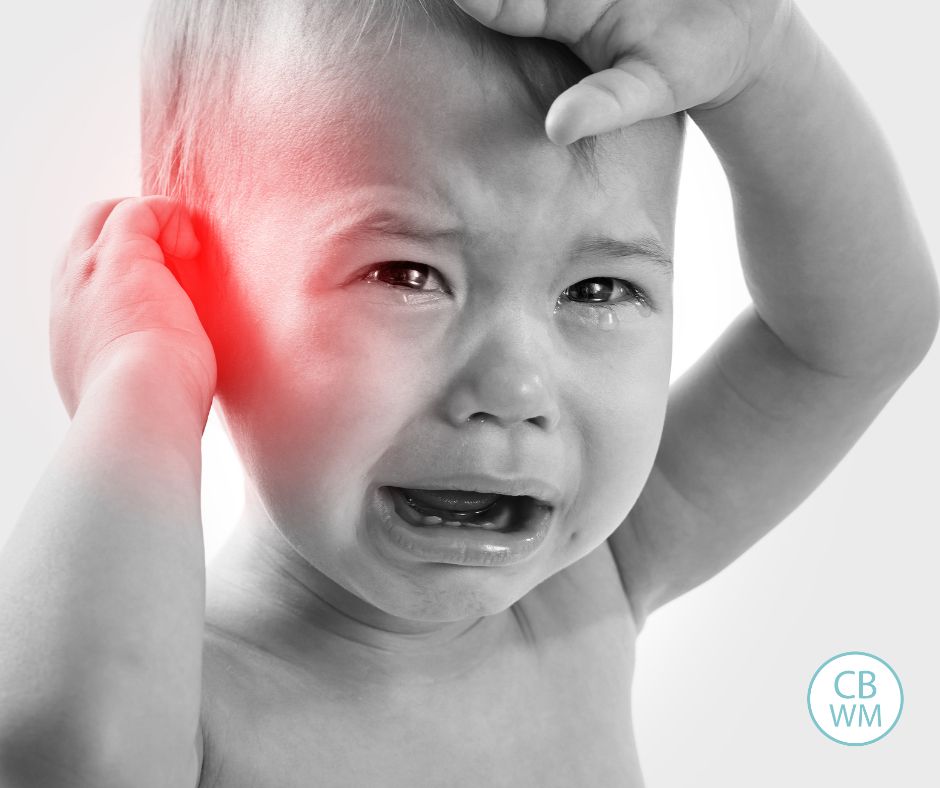
One of the most common causes of a pre-toddler or toddler suddenly waking at night or refusing to nap is an ear infection. If your previously great sleeper is inexplicably falling apart, an ear infection could absolutely be the culprit — and it’s worth knowing the signs.
Ear infections are painful. The pressure that builds up in the middle ear is genuinely uncomfortable, and for a baby or toddler who can’t tell you what hurts, that pain comes out as crying, clingy behavior, tugging at the ear, and disrupted sleep. On top of the immediate misery, chronic ear infections can prevent your child from hearing well during a critical window for language development, which makes getting on top of them all the more important.
We went through this firsthand with my daughter McKenna. She was a chronic ear infection kid, and what started as “wait and see” visits to the pediatrician eventually turned into a conversation with an ENT about tubes and tonsils. I’ll share what we learned — along with tips from other moms who have navigated this — so you have a full picture of your options.
For more on recognizing the signs of an ear problem in your child, read: Addressing Concerns About Baby’s Ears
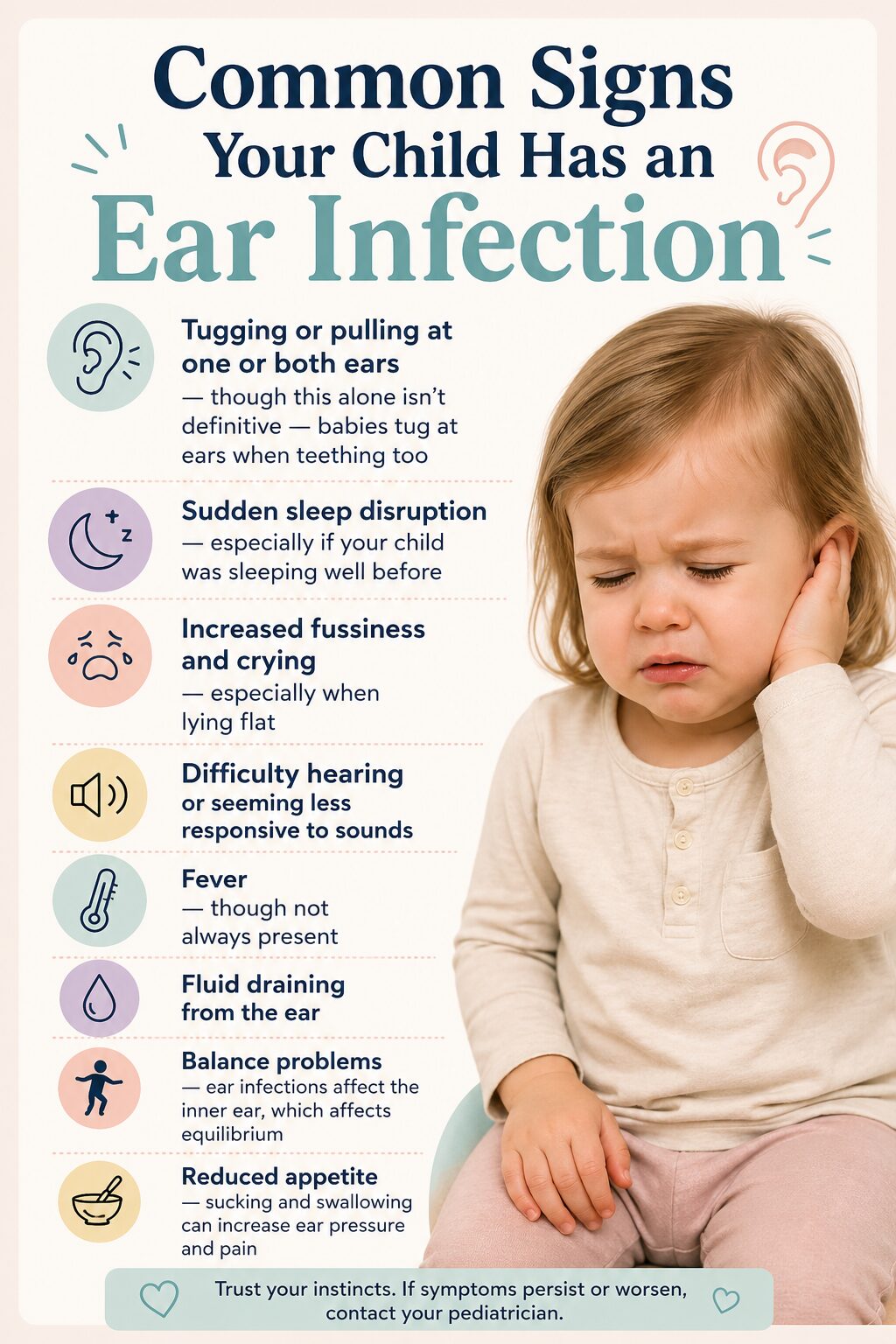
Common Signs Your Child Has an Ear Infection
Before we get into treatment, it helps to know what you’re dealing with. Here are the most common signs that a baby, toddler, or young child may have an ear infection:
- Tugging or pulling at one or both ears — though this alone isn’t definitive — babies tug at ears when teething too
- Sudden sleep disruption — especially if your child was sleeping well before
- Increased fussiness and crying — especially when lying flat
- Difficulty hearing or seeming less responsive to sounds
- Fever — though not always present
- Fluid draining from the ear
- Balance problems — ear infections affect the inner ear, which affects equilibrium
- Reduced appetite — sucking and swallowing can increase ear pressure and pain
If you want to reduce guesswork at home, a Dr. Mom Otoscope is genuinely helpful. I have loved having one. It lets you look in the ear canal and get a clearer picture of what’s happening before (or instead of) an urgent care run. Our pediatrician showed me how to use it and what to look for so I would know if I needed to bring McKenna in or not.
Getting Rid of the Infection
The right approach depends on your child, the severity, and your own comfort level with different types of treatment. Here’s what moms have used — from conventional medicine to home remedies.
Antibiotics (Prescribed by Your Doctor)
For bacterial ear infections, antibiotics are the standard medical treatment. That said, it’s worth knowing what one mom shared: her doctor mentioned that in some European countries, the standard of care is to wait three days before prescribing antibiotics, since many ear infections will resolve on their own. Talk to your pediatrician about what’s appropriate for your child’s specific situation.
One practical tip from mom Alicia: draw a grid on the medicine bottle with a permanent marker — one box per dose. Check off each box as you give it. It sounds simple, but when you’re sleep-deprived and administering antibiotics multiple times a day, this little trick prevents double-dosing or missed doses. She added: “After the meds, then it’s snuggle time. The only time our kids ever slow down is when they are sick.”
Garlic Oil
Garlic has natural antimicrobial properties, and garlic oil drops are a go-to home remedy for many parents. Mom Ruby shared her approach in detail:
“Cut up several cloves of garlic and soak in olive oil for a day. Strain out the garlic and put the oil into a glass dropper. Put 3 drops in the ear and make them lie so the oil doesn’t come out — watch a movie. Within hours they will feel better. I run the dropper under hot water so it’s warm going into the ear. It will store for at least a year. Since I started doing this 4 years ago I have never been to a doctor for ear infections.”
You can also find pre-made versions like the Herb Pharm Mullein/Garlic Compound if you’d prefer a ready-to-use option. This is what we use at our house (yes, McKenna STILL sometimes gets ear infections at 17 years old!)
Essential Oils
Essential oils are popular in the natural parenting community for ear infections. Options moms have used include Young Living Melrose and doTERRA Melaleuca.
Mom Salina’s approach: “I massage all behind the ear and down the eustachian tube to the throat with the essential oil (basil) and coconut oil several times a day.”
Mom Hunter echoes this: “We do melaleuca essential oil from doTERRA behind the ears, hot damp packs held over the ear, and a trip to the chiropractor. We try to always avoid antibiotics!”
Hydrogen Peroxide
A few drops of hydrogen peroxide (3%) in the ear is a classic home remedy, suggested by dad Travis. The bubbling action can help clear debris and may have mild antimicrobial effects. Always check with your doctor if your child has ear tubes, as this may not be appropriate.
Apple Cider Vinegar
Mom Rachel shared her experience: “I’ve used vinegar! When my ear ached, the vinegar burned but after a few applications (a few hours in between) it went away completely without antibiotics or any other measure. I’ve also tried it with my son and it worked for him.” She notes she’s not suggesting this as a substitute for medical treatment, but it has worked for her family.
Helping the Pain
While the infection clears — whether through antibiotics or home remedies — managing your child’s pain is the immediate priority. Here’s what helps.
Elevation
Lying flat increases pressure in the ear. Prop the head end of the mattress slightly, or let your child sleep in a more upright position. Multiple moms mentioned that sleeping in a recliner together got them through some really rough nights. Mom Amy shared: “Propping his head and having him laying on a heating pad gave him quick relief.”
Heat Therapy
Warmth is one of the most consistently helpful pain relievers for ear infections. Options include:
- Warm compress — a hot or warm washcloth held against the ear
- Heating pad — on a low setting, placed under or against the ear
- Rice sock — fill a sock with dry rice, microwave carefully (they get hot fast and stay hot), and place over the ear. Mom Kari noted this was very soothing for her as a child, with the reminder that this is better suited for older children who can communicate if it’s too hot.
Warm Olive Oil Drops
Mom Sheri learned this from her doctor: “Warm up olive oil in the microwave in a small container (20–30 seconds). Suck it into a syringe and squirt it gently in their ear(s). Put a small portion of a cotton ball in their ear to absorb the oil.” The warmth and the oil both help soothe inflamed tissue.
Pain Relievers
Ibuprofen (Advil/Motrin) is often recommended over acetaminophen (Tylenol) for ear infections specifically, because its anti-inflammatory action addresses the swelling that causes pressure and pain — not just the pain itself. Multiple moms and at least one pediatrician noted that Advil tends to work better for ear pain than Tylenol alone. Always use the correct dose for your child’s weight, and check with your doctor for infants under 6 months.
Hyland’s Earache Drops
Hyland’s Baby Infant Earache Drops are a popular homeopathic option that many parents reach for alongside other treatments.
Rock and Hold
Sometimes the best pain reliever is a parent’s arms. Holding, rocking, and staying close provides real comfort to a hurting child, and it’s okay to throw the schedule out the window for a few days while your little one recovers.
Preventing Ear Infections
Once you’ve survived an ear infection (and the sleep deprivation that comes with it), preventing the next one becomes a priority. Here are the most common strategies parents and medical professionals recommend.
Identify and Address the Root Cause
This is the most important step, even if it’s the hardest. For my daughter McKenna, we discovered that her tonsils were chronically enlarged and infected. Food would get caught in them, and her ENT believed this was a significant contributing factor to her recurring ear infections. She had her tonsils removed alongside her ear tube surgery, and it made a significant difference.
Mom Monica echoed a similar experience with her son Wells: “Wells didn’t even suffer with a lot of pain but he had fluid on his ear and it wouldn’t drain. I found going to an ENT and getting tubes rather than waiting and seeing if they grow out of it was better for me. Wells started talking more and just changed after he had tubes, adenoids, and tonsils out.”
The takeaway: don’t just treat the symptom. Ask your doctor — and ideally an ENT — whether there’s an underlying cause driving repeated infections.
Ear Tubes
Ear tubes (tympanostomy tubes) are small cylinders surgically inserted into the eardrum to allow fluid to drain and air to circulate in the middle ear. They don’t prevent all ear infections, but they do several helpful things:
- Allow infections to drain out rather than build up against the eardrum
- Reduce pain significantly when infections do occur
- May reduce the frequency of infections by improving drainage
- Allow infections to be treated with ear drops rather than oral antibiotics
I want to be honest here: I wouldn’t rush into tubes. They’re not risk-free. There’s a small chance that holes can remain after tubes are removed, which can lead to further procedures and potential long-term hearing risk. We went with tubes and tonsil removal at the same time specifically to avoid two surgeries — and I’m glad we did. But I would try other interventions first, and I’d get an ENT opinion alongside your pediatrician’s, as they often see things differently on this question.
Mom Lacey shared: “Tubes were the best decision we ever made for a kid who kept getting ear infections. And numbing drops are AMAZING.”
>>>Read: Should Your Child Get Ear Tubes?
Chiropractic Care
Several moms mentioned chiropractic adjustments as part of their prevention routine. The theory is that spinal misalignments — particularly in the neck — can affect eustachian tube drainage. While the evidence base is limited, many families report positive results, and it’s low-risk when done by a pediatric chiropractor or physical therapist.
Dietary Changes: Eliminate Dairy
Dairy is a known mucus-producer for some children, and increased mucus can contribute to fluid buildup in the middle ear. If your child has chronic ear infections, an elimination trial of dairy for 3–4 weeks is worth discussing with your doctor. Some families see a significant reduction in frequency after removing dairy.
Mucinex (for Older Children)
Mom Monica mentioned that Mucinex helped her son when he got a cold, since congestion is often what triggers an ear infection in the first place. This is only appropriate for older children, so check with your doctor on age and dosing.
Breastfeeding
If you’re still in the nursing stage, it’s worth knowing that breastfeeding is associated with a lower incidence of ear infections. Breastmilk contains antibodies that help protect the ear and throat, and the mechanics of breastfeeding (versus bottle feeding) also reduce the chance of milk pooling near the eustachian tube. If possible, avoid bottle feeding while your baby is lying flat.
Extra Tips Worth Knowing
Give probiotics during (and after) antibiotics. This is non-negotiable. Mom Tiffany put it plainly: “Once they get antibiotics, be SURE to also give them yogurt or a probiotic! For my 3-year-old, the diarrhea was WAY worse than the ear infection.” Antibiotics wipe out gut bacteria along with the bad bacteria — probiotics help restore balance.
Keep up fluids. Staying hydrated helps thin mucus and supports recovery. Lots of water throughout the day makes a real difference.
Humidifier and steam. Mom Jessica shared what helped alongside antibiotics: “We do Vicks Baby on her chest at night, a cool mist humidifier, and we steam up the bathroom if we need to help her during a bad cough at night.” Steam helps relieve the congestion that can feed ear infections.
Saline spray. Keeping nasal passages clear reduces the congestion that often leads to fluid in the ear. A saline spray or a Nose Frida is a simple, low-effort addition to your sick-day toolkit.
Warm lemon water. Mom Jessica also mentioned warmed lemon and water as something that helped her daughter feel better during recovery.
When to See a Doctor
Home remedies and watchful waiting are reasonable first steps for mild ear pain, but some situations call for a prompt doctor visit:
- Fever over 102.2°F in a young child
- Symptoms that worsen or don’t improve within 48–72 hours
- Fluid or pus visibly draining from the ear
- Signs of significant hearing loss
- Child under 6 months with any ear pain symptoms
- Third or more ear infection within a year — this is the threshold at which an ENT referral is worth pursuing
A Note on Chronic Ear Infections and Speech Delay
If your child is experiencing frequent ear infections, pay attention to their language development. Even a mild, consistent hearing loss — the kind that comes from fluid persistently sitting behind the eardrum — can affect how clearly a child hears speech sounds during the critical early language window. This doesn’t mean every ear infection leads to a speech delay, but it’s a reason to take recurring infections seriously rather than always waiting them out.
Talk to your pediatrician if you’re noticing that your child’s speech seems behind or if they’re not responding to sounds the way you’d expect.
Related Posts
Have something that helped your family survive an ear infection? Share it in the comments — this post was built from real mom wisdom, and the more we share, the more we all benefit.
This post first appeared on this blog in March 2014