Fall produce makes some of the best baby first foods — and they’re easier to prep than you think. Sweet potato, butternut squash, pears, and apples: puree ideas, finger foods, and how to fit them into your Babywise feeding windows.
There’s something special about introducing your baby to food when the season is changing — the air gets a little crisp, the farmers’ markets are overflowing with color, and suddenly you have the most perfect first foods nature has to offer sitting right there waiting. Fall produce and baby food go together beautifully. The flavors are naturally mild and sweet, the textures puree like a dream, and the nutritional punch is hard to beat.
If your baby is just starting solids — or if you’re a few weeks in and looking for what to try next — this post walks you through four fantastic fall first foods: sweet potato, butternut squash, pears, and apples. For each one, you’ll find puree ideas, finger food options for when baby is ready, and tips for working them into your Babywise feeding windows without disrupting your routine.
Don’t be afraid to make babyfood! I was nervous with my first couple of babies, but then I went all in with my last two. It is super easy! Read more here How To Make Homemade Baby Food.
Let’s dive in!
A Quick Reminder: How Solids Fit Into Your Babywise Schedule
Before we talk about the foods themselves, I want to touch on something I see trip up a lot of parents when they first start solids. It’s one of those things that seems like it should be obvious, but really isn’t.
Solid foods go with your existing feeding — not in between feedings.
Here’s the pattern that works: when your baby wakes from a nap, start with your liquid feeding (breast milk or formula first), then move on to solids. Wake, eat (liquid + solids), play, sleep. That’s it. The eat/wake/sleep rhythm you’ve been building since day one stays intact.
What you want to avoid is something like this:
- 7 AM — Nurse
- 9 AM — Solids
- 9:30 AM — Nap
Do you see the problem? That baby is now eating every two hours instead of every three to four. Adding a separate solids “snack time” between liquid feedings essentially turns your baby into a grazer — and that tends to show up as sleep problems pretty quickly, because a baby who’s perpetually snacking is never quite hungry and never quite full.
The corrected version looks like this:
- 7 AM — Nurse, then solids
- 9:30 AM — Nap
- 11 AM — Nurse, then solids
- 1:30 PM — Nap
- 4 PM — Nurse, then solids
- 7 PM — Nurse, then bedtime
Aim for three solid feedings per day at a minimum of four liquid feedings. If you’re on a four-feeding schedule, not every feeding needs to include solids — pick the three that work best with your daily rhythm.
One more thing: you don’t start at three solid meals a day. You start with one, give it a few days (sometimes up to a couple of weeks), then add a second, and eventually a third. Nice and gradual.
Now, on to the fun part!
>>>Read: Baby’s Feeding Schedule With Solid Foods
Sweet Potato
Sweet potato might be the single most perfect baby first food out there. It’s naturally sweet, it’s creamy when pureed, it’s packed with beta-carotene and vitamin C, and babies almost universally love it. When I introduced sweet potato to my kids, there were zero nose scrunches — just wide eyes and open mouths asking for more. It was an absolute favorite for all four of my kids!
As a Puree
Roasting is your best friend here. Cut a sweet potato in half, brush with a tiny bit of olive oil, and roast face-down at 400°F for about 40 minutes until completely soft. Scoop out the flesh and blend with a little breast milk, formula, or water until smooth. You’ll get a beautifully silky puree that smells absolutely incredible.
You can also steam cubed sweet potato for about 15 minutes and blend the same way — this method preserves a few more nutrients and is great if you’re batch cooking.
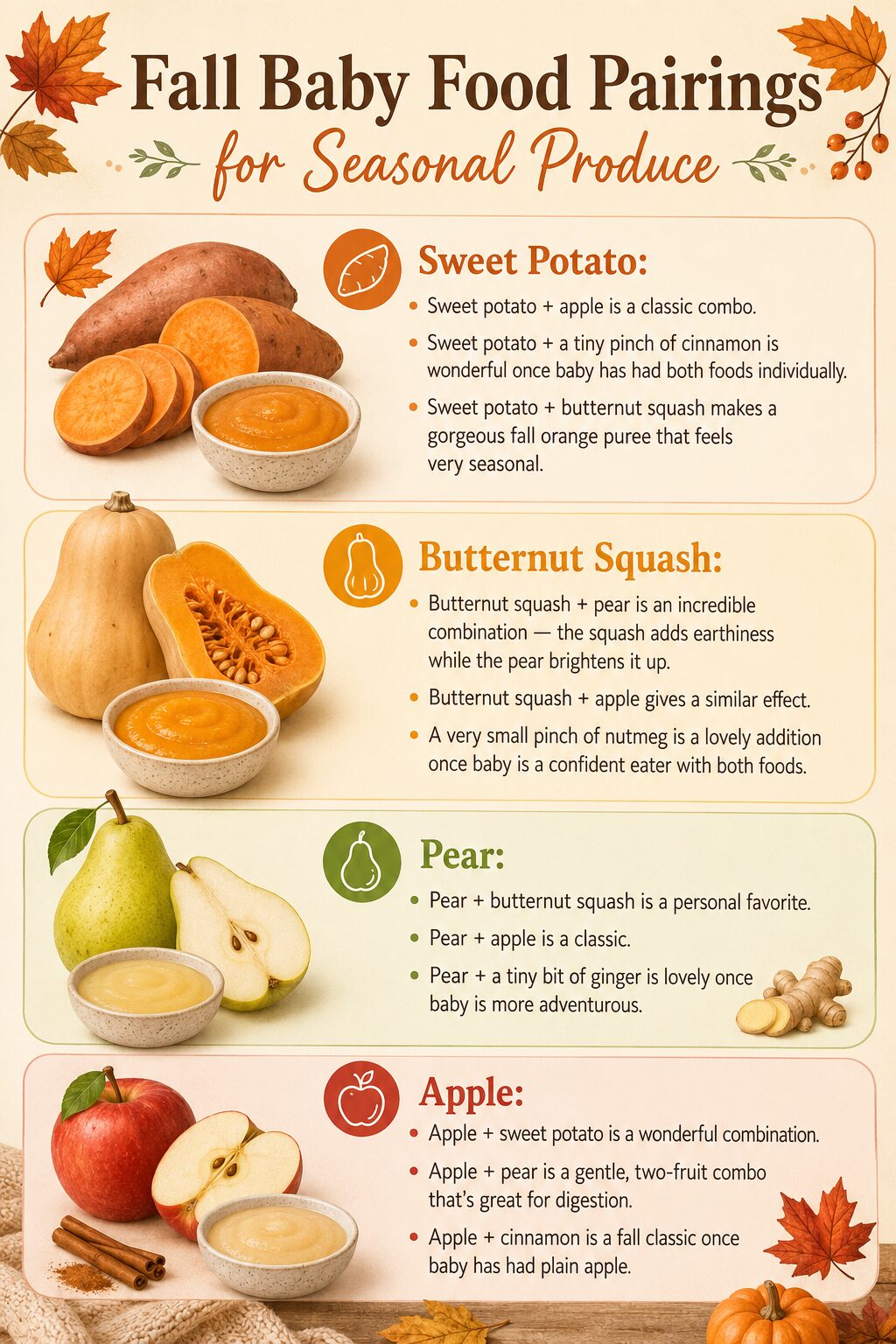
Flavor pairings to try: Sweet potato + apple is a classic combo. Sweet potato + a tiny pinch of cinnamon is wonderful once baby has had both foods individually. Sweet potato + butternut squash makes a gorgeous fall orange puree that feels very seasonal.
Storage tip: Freeze pureed sweet potato in ice cube trays and pop them into labeled zip-lock bags. Each cube is roughly one ounce — super handy for building up those small tablespoon portions as baby gets used to solids.
As a Finger Food
Once your baby has developed the pincer grasp and you’re moving into self-feeding territory (typically around 8–10 months, though every baby is different), sweet potato makes an excellent finger food. Roast it in small cubes or strips until completely tender — you should be able to smash it easily between two fingers. That’s your test for whether it’s safe for baby.
Avoid giving raw sweet potato; it’s too hard for a baby to manage safely.
Working It Into Your Feeding Window
Because sweet potato is so well-accepted, it’s a great food to use at any of your three solid meals. Many families use it at “dinner” — the third solid feeding of the day. It pairs well as a yellow/orange vegetable alongside a fruit puree to round out the meal.
>>>Read: How To Make Sure You Are “Feeding the Rainbow”
Butternut Squash
Butternut squash is sweet potato’s close cousin in the first foods world. Same gorgeous orange color, similar mild sweetness, and equally easy to puree smooth. It has a slightly more buttery, nutty flavor that many babies seem to enjoy — and it freezes beautifully for batch cooking sessions.
As a Puree
The easiest method: cut the squash in half lengthwise, scoop out the seeds, and roast face-down on a parchment-lined baking sheet at 400°F for 45–50 minutes. Scoop out the flesh (it’ll come away easily) and blend until smooth, adding liquid as needed to reach the right consistency for your baby’s stage.
If you want to skip the roasting, you can peel and cube the squash, then steam it for about 15 minutes until fork-tender before blending.
Flavor pairings to try: Butternut squash + pear is an incredible combination — the squash adds earthiness while the pear brightens it up. Butternut squash + apple gives a similar effect. A very small pinch of nutmeg is a lovely addition once baby is a confident eater with both foods.
As a Finger Food
Roasted butternut squash cubes are a wonderful early finger food. As with sweet potato, cook them until very soft — easily mashable between your fingers — and cut into small, age-appropriate pieces. The naturally sweet flavor makes them very appealing to babies exploring self-feeding.
Working It Into Your Feeding Window
Butternut squash works well as a “lunch” or “dinner” veggie option. Try pairing it with a fruit puree at the same feeding. It’s a gentle, mild food that’s unlikely to cause any digestive upset, making it a safe bet for the morning meal as well if you want to watch for any reactions early in the day.
Pears
Pears are among the gentlest, most digestive-friendly first fruits you can offer. They’re naturally sweet and mild, and they’re actually known for being helpful if baby’s tummy needs a little help moving things along after all that iron-fortified cereal. If sweet potato or squash has your baby a bit backed up, pear is your friend.
As a Puree
Ripe pears are wonderfully easy to puree. Peel, core, and steam them for 5–8 minutes until soft, then blend until smooth. Ripe Bartlett or D’Anjou pears are excellent choices for baby. The riper the pear, the sweeter and easier to blend — so don’t be afraid to use pears that are past their prime for snacking but haven’t turned.
If your baby is a few months into solids, you can try blending raw ripe pear (very ripe only) for a fresh, bright puree — though steaming is safer and more consistent for younger babies just starting out.
Flavor pairings to try: Pear + butternut squash is a personal favorite. Pear + apple is a classic. Pear + a tiny bit of ginger is lovely once baby is more adventurous.
As a Finger Food
Very ripe, soft pear can be offered in small cubes as a self-feeding option. The key word is ripe — an underripe pear is too firm and too slippery to be safe. You can also lightly steam pear pieces to make them even softer if you’re not confident in the ripeness. Canned pears in 100% fruit juice (not syrup) can also work in a pinch — they’re already soft and just need to be drained and cut up.
Working It Into Your Feeding Window
Pears are wonderful at breakfast or lunch. They’re light, easy to digest, and pair beautifully with other foods. Try offering pear puree alongside a veggie puree at the same feeding — a tablespoon of each is a lovely little fall meal.
>>>Read: How To Introduce Solid Foods to Your Baby
Apples
Apples feel almost universally baby-approved. There’s a reason apple is one of the classic first fruits — the flavor is familiar, slightly tart and sweet all at once, and it blends into a smooth puree that most babies take to happily. Plus, if you’re making your own, the whole house smells amazing while the apples are cooking.
As a Puree
Peel, core, and dice your apples, then simmer them in a small amount of water for 8–10 minutes until very soft, or steam them for a similar amount of time. Blend until smooth. You can leave it completely plain, which is great for introducing the single-ingredient food, or add a touch of cinnamon once apple is an established food.
Fuji, Gala, and Golden Delicious varieties tend to be naturally sweeter and make a more appealing baby puree. Granny Smith is more tart and may not be quite as well-received by young palates.
Flavor pairings to try: Apple + sweet potato is a wonderful combination. Apple + pear is a gentle, two-fruit combo that’s great for digestion. Apple + cinnamon is a fall classic once baby has had plain apple.
As a Finger Food
Raw apple is a choking hazard and should not be given to babies and young toddlers without being either cooked or very finely grated. For finger foods, steam or bake apple slices until completely soft and cut into small cubes. Alternatively, peel a very ripe, soft apple and grate it finely for a quick no-cook option.
Unsweetened applesauce (single ingredient, no added sugar) is also a great transition between purees and finger foods — it has a slightly different texture that helps babies practice with a spoon.
Working It Into Your Feeding Window
Apple puree is incredibly versatile. It works well at any of your three daily solid feedings. If your baby is on the constipated side from starting solids, pairing apple with pear at the same feeding is a gentle and effective approach. Apple also pairs beautifully with veggie purees if you have a baby who needs a little extra sweetness to accept their vegetables.
Batch Cooking Tips for Busy Moms
One of the best things about fall first foods is that they batch cook like a dream. Here’s how I like to approach a weekend prep session:
Roast a whole tray of sweet potato and butternut squash at the same time (both at 400°F, both roasted face-down). While those are in the oven, simmer a pot of apple and pear pieces on the stovetop. By the time everything is done, you have four different pureed foods ready to freeze.
Blend everything, pour into ice cube trays, freeze overnight, then transfer to labeled freezer bags. Each cube is approximately one ounce. You can pull out exactly what you need at each feeding and thaw quickly in the refrigerator or in a small bowl of warm water.
Pureed fruits and vegetables keep in the freezer for up to three months — so a couple of good prep sessions in September will carry you well into the winter.
Putting It All Together: A Sample Fall Solids Day
Here’s an example of what a day of fall first foods might look like for a baby who is a established at eating solids and eating three small meals per day:
Morning (first liquid feeding of the day): Nurse or bottle, then 1 tablespoon apple puree + 1 tablespoon butternut squash puree
Midday (second liquid feeding): Nurse or bottle, then 1 tablespoon pear puree + 1 tablespoon sweet potato puree
Afternoon/Evening (third liquid feeding): Nurse or bottle, then 1 tablespoon sweet potato puree + 1 tablespoon apple puree
The amounts are small intentionally — baby is still getting the vast majority of nutrition from breast milk or formula. Solids at this stage are about exploration, practice, and gradually expanding what baby eats. Follow your baby’s hunger and fullness cues, never force more than they want, and enjoy watching them discover all these new flavors!
>>>Read: >>>Read: Baby Meal Planner {Free Printable}
Conclusion
Fall is such a wonderful time to be introducing solids. The produce is beautiful, the flavors are cozy, and there’s something fitting about a baby experiencing their first real tastes of food right alongside the season changing around them. Sweet potato, butternut squash, pears, and apples give you a generous, delicious starting lineup — and they’ll set the stage for a baby who grows up loving real, whole food.
As always, stick with your Babywise routine, keep those feeding intervals at three to four hours, and trust the process. You’re doing great, mama!
Related Posts
- Baby Feeding Times for Solid Foods
- Tips for Introducing Solids to Your Baby “Randomly”
- Common Questions When Starting Purees with Baby
- Baby’s First 8 Weeks of Solid Foods
- How Cooler Weather Affects Naps & Outdoor Playtime
- 10 Really Fun Things to Do With Your Kids This Fall
- 15 Fall Picture Books Kids Will Love
- Our Family Favorite Fall Recipes to Try this Season